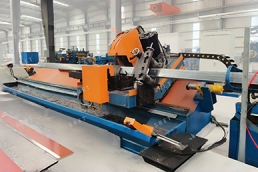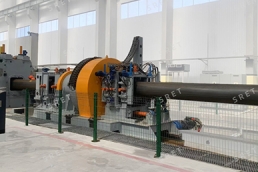

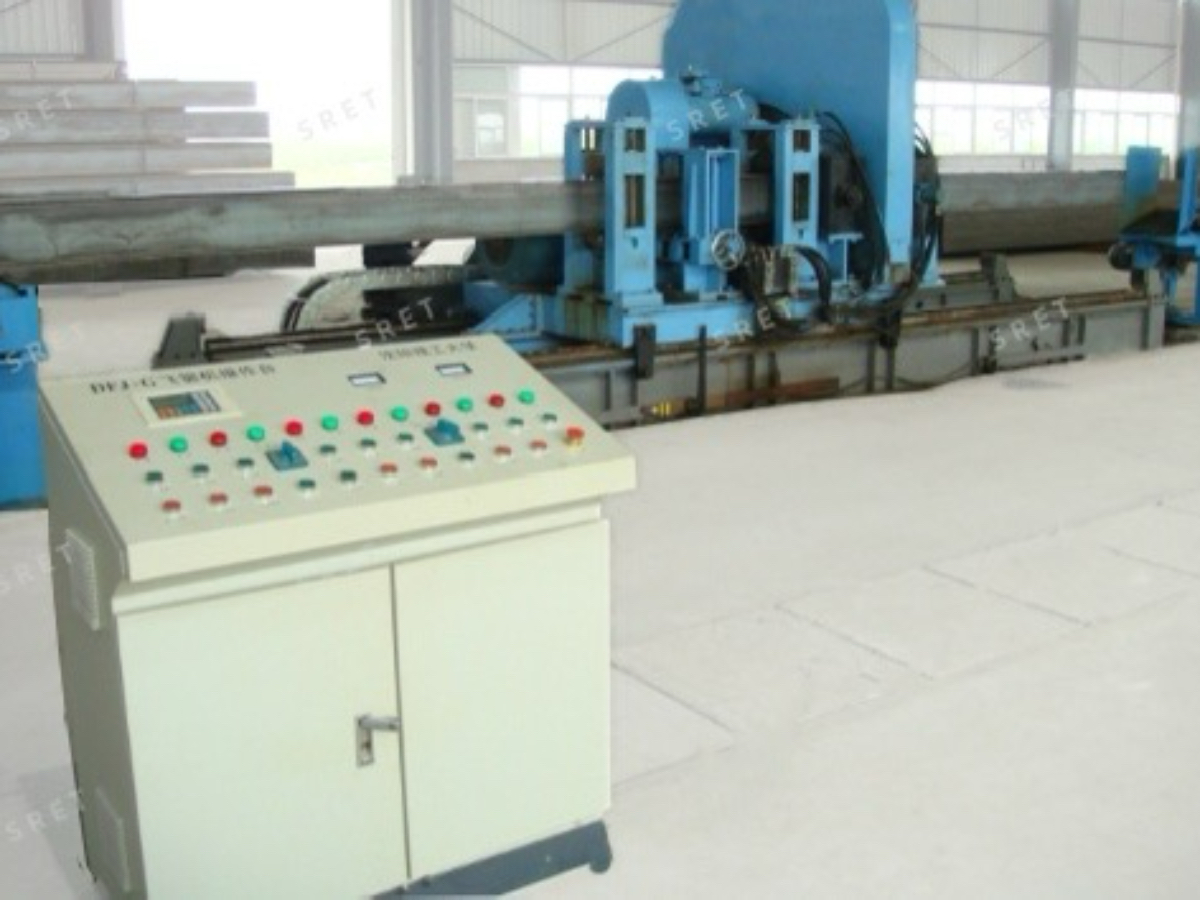
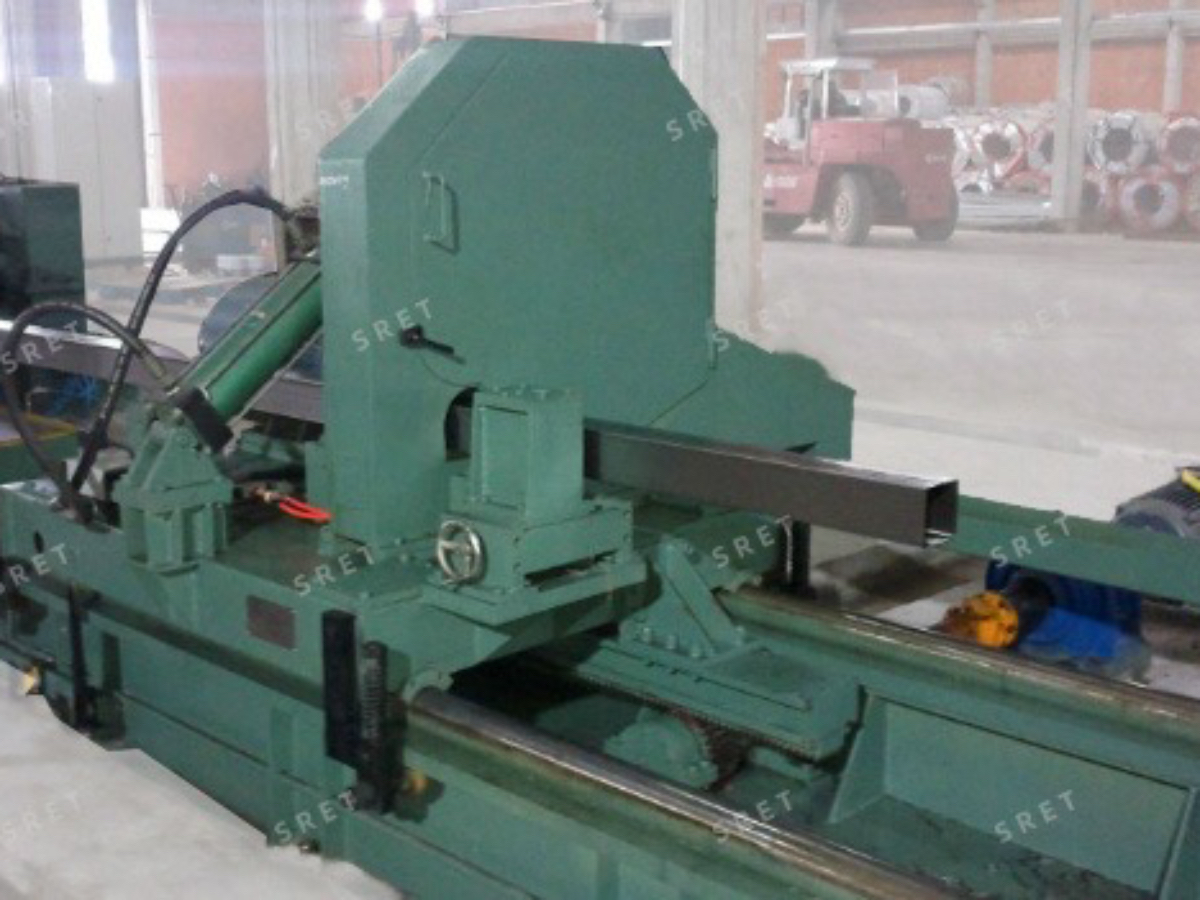
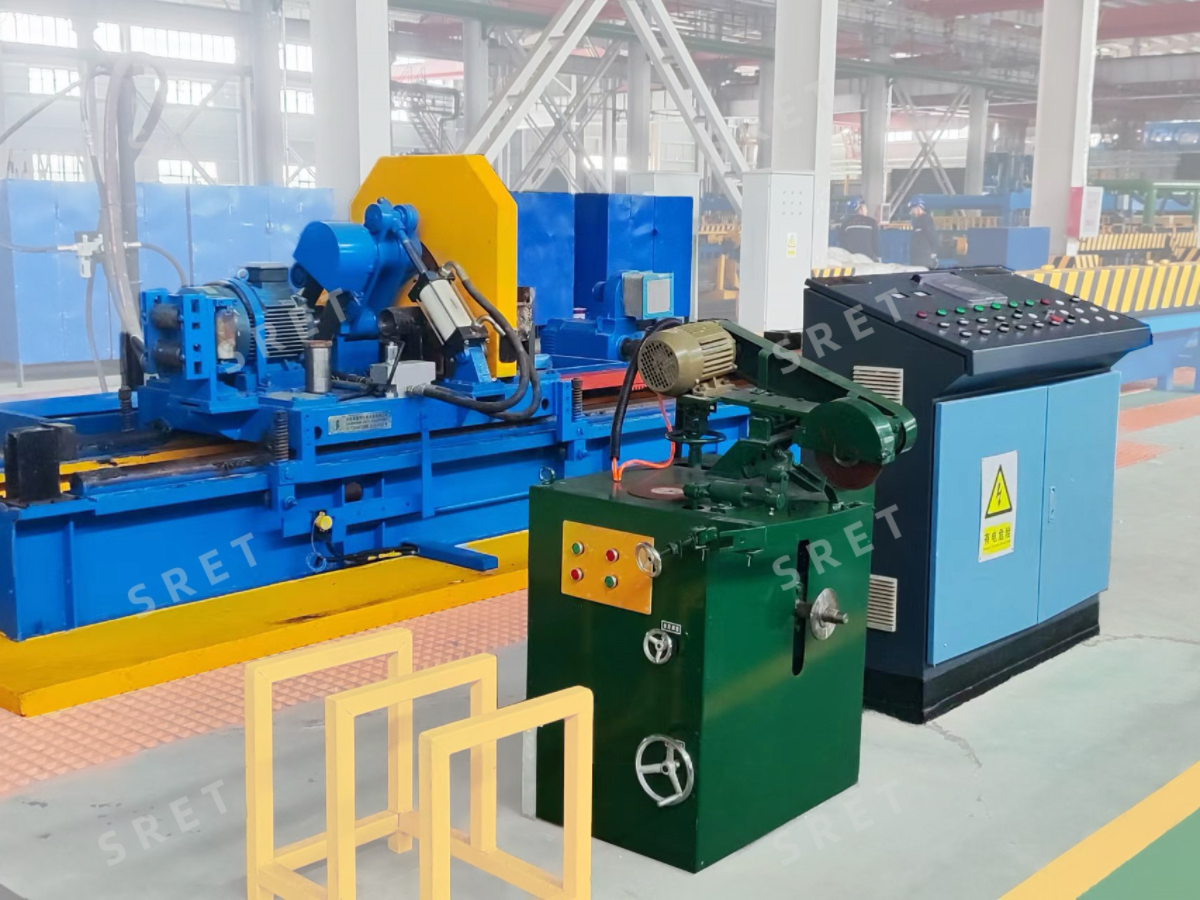
The flying cut off machine is designed for continuous in-line cutting of tube and pipe products while maintaining synchronization with the tube mill line speed. It uses a motion control system to track the running tube and complete the cut at a pre-set length.
The system integrates a speed measuring roll, a photoelectric encoder, and a traveling carriage driven by a DC motor through a rack-and-pinion mechanism. Once programmed, the machine can operate in a fully automatic mode.
When the tube from the sizing mill reaches the flying cut off, it runs on a speed measuring roll. A photoelectric encoder installed on the roll measures the running speed and length of the tube and converts them into pulse electronic signals, which are transmitted to the motion control system.
After receiving the instruction signals, the traveling carriage accelerates to track the running tube. The carriage reaches the line speed and remains synchronized until the pre-set cut length is reached.
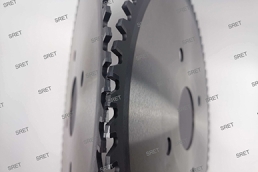
At that point, the clamping fixtures on the carriage clamp the running tube, with clamping action actuated hydraulically or pneumatically depending on the model. The rotating saw blade then cuts the tube under cylinder or oil cylinder control.
After cutting is completed, the clamps open, the carriage decelerates and stops, and the feeding and sawing systems return to their initial positions for the next work cycle.
Synchronization with tube mill line speed for in-line cutting.
Encoder-based measurement of tube speed and length for cut length control.
Fully automatic operation once programmed.
HMI-based operation for parameter setting, monitoring, alarms, and real-time status display.
Remote diagnostic module for remote status assessment and troubleshooting.
The flying cut off machine is suitable for tube and pipe production lines that require continuous cutting at line speed. It is available in models covering tube diameters from 10 mm to 406 mm, with wall thicknesses up to 14 mm.
The machine is also available in H-beam configurations for structural steel applications. Pneumatic and hydraulic cut-off modes are selected according to the tube diameter, wall thickness, and model range.
The following tables list the available models and their specification ranges. Selection depends on tube diameter, wall thickness, required length, tolerance, line speed, and cut-off mode.
| Model No. | Ø (mm) | Thickness (mm) | Length (m) | Tolerance (mm) | Speed (m/min) | Cut Off Mode |
|---|---|---|---|---|---|---|
| FJ19 | 10 – 19 | 0.6 – 1.6 | 4 – 12 | ≤ ±2 | 0 – 140 | Pneumatic |
| FJ32 | 10 – 32 | 0.6 – 1.6 | 4 – 12 | ≤ ±2 | 0 – 140 | Pneumatic |
| FJ50 | 20 – 50 | 1.0 – 3.5 | 4 – 12 | ≤ ±3 | 0 – 130 | Pneumatic |
| FJ76 | 32 – 76 | 1.0 – 4.0 | 4 – 12 | ≤ ±3 | 0 – 110 | Pneumatic |
| FJ89 | 38 – 89 | 1.5 – 4.0 | 4 – 12 | ≤ ±3 | 0 – 100 | Pneumatic |
| FJ114 | 50 – 114 | 1.5 – 5.0 | 4 – 12 | ≤ ±3 | 0 – 80 | Pneumatic |
| FJ165 | 89 – 165 | 2.0 – 7.0 | 4 – 12 | ≤ ±3 | 0 – 75 | Pneumatic / Hydraulic |
| FJ219 | 89 – 219 | 2.0 – 8.0 | 6 – 12 | ≤ ±3 | 0 – 75 | Hydraulic |
| FJ273 | 114 – 273 | 4.0 – 10.0 | 6 – 12 | ≤ ±3 | 0 – 50 | Hydraulic |
| FJ325 | 165 – 325 | 5.0 – 12.0 | 6 – 12 | ≤ ±3 | 0 – 45 | Hydraulic |
| FJ406 | 165 – 406 | 4.0 – 14.0 | 6 – 12 | ≤ ±3 | 0 – 40 | Hydraulic |
| Model No. | Flange (mm) | Web (mm) | Speed (m/min) |
|---|
| Model No. | Flange (mm) | Web (mm) | Speed (m/min) |
|---|---|---|---|
| FJ300 | 200 x 8 | 300 x 5 | 0 – 50 |
| FJ400 | 250 x 12 | 400 x 8 | 0 – 45 |
| FJ500 | 300 x 12 | 500 x 8 | 0 – 40 |
| FJ600 | 300 x 14 | 600 x 10 | 0 – 35 |
| FJ700 | 400 x 16 | 700 x 12 | 0 – 35 |
It cuts tube or pipe while keeping synchronized with the production line speed so the material can be cut to the required length without stopping the line.
A speed measuring roll and photoelectric encoder measure the running speed and length of the tube, and the motion control system uses these signals to trigger cutting at the pre-set length.
The clamps open, the carriage decelerates and stops, and the feeding and sawing systems return to their initial positions for the next cycle.
Yes. Once programmed, the flying cut off machine can operate in a fully automatic mode.
The cut-off mode depends on the model range and the required application. Pneumatic and hydraulic configurations are available for different tube sizes and wall thicknesses.