A flying cutoff cuts continuously moving tube into specified lengths without stopping the production line for each cut. During cutting, the cutoff carriage travels with the tube, allowing the cutting operation to take place while production continues.
On an ERW tube mill line, cutoff selection depends on more than the cutting method. Tube material, profile, dimensions, wall thickness, production speed and required cut length all influence the equipment configuration. The required cut-end condition must also be considered.
This article explains how flying cutoffs operate, compares friction, cold saw and orbital milling arrangements, and outlines the information needed to select a suitable system.
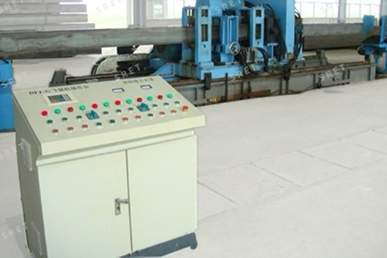
The main principle is synchronized movement. Before the cut, the carriage accelerates to match the tube’s forward speed. The cutting assembly then travels with the tube while the cut is completed.
This is sometimes described as reducing the relative longitudinal movement between the tube and the cutting assembly. It does not mean that the tube stops moving through the production line.
A typical operating sequence includes:
The available cycle time must accommodate these movements. Cutting time alone is therefore not enough to determine whether a cutoff can meet a particular production requirement.
Friction cutting, cold sawing and orbital milling use different cutting arrangements. Their suitability should be evaluated against the intended product range and operating conditions rather than general claims about speed or cut quality.
A friction flying cutoff uses a high-speed rotating blade, with frictional heat contributing to material separation. It is an option where the material, production requirements and downstream finishing process are compatible with this cutting method.
When assessing a friction saw, consider the required tube-end condition. Burrs, thermal effects and any subsequent end finishing should be included in the technical discussion.
Blade requirements, maintenance access and the supported tube range also matter. The equipment should be evaluated for the intended application rather than selected on purchase price alone.
For equipment specifications and operating requirements, see SRET’s friction flying cut off product page.
A cold saw uses a toothed blade to remove material during cutting. Cold saw flying cutoffs are used where controlled cutting and a cleaner tube end are important.
The resulting cut quality depends on blade selection, cutting parameters, tube support and machine condition. The term “cold saw” should not be treated as an unconditional guarantee of burr-free cutting under every operating condition.
For an ERW Tube Mill producing several specifications, the proposed arrangement should be reviewed across the intended product range. Ask which blade changes, setup adjustments and operating parameters apply when changing tube dimensions or materials.
For equipment configurations and application details, see SRET’s cold saw flying cut off product page.
An orbital milling cutoff uses coordinated tool movement to follow a cutting path around the tube section. Depending on the machine design, the path can be generated through polar-coordinate or rectangular-coordinate motion.
This arrangement is used for applications involving larger or heavier tube sections. Selection should address the actual profile, wall thickness, clamping arrangement and required cutting path. A general statement such as “suitable for special-shaped tubes” does not establish compatibility with every section.
Double-blade milling can form part of an orbital cutoff configuration rather than a completely separate machine category. In the arrangement described on SRET’s orbital milling product page, two blades cooperate in the cutting process.
The page also describes a dual-mode configuration that can select between single-blade sawing and double-blade orbital milling. The applicable cutting mode and processing range should be confirmed for the proposed equipment.
For cutting-path details and available configurations, see SRET’s orbital milling type flying cut off product page.
For saw-based cutoff systems, the blade must be selected for the cutting method and tube application. A blade intended for one sawing arrangement should not automatically be assumed suitable for another.
Relevant information includes the tube material, dimensions, wall thickness, internal weld-bead condition and cutting arrangement. Blade selection should be considered together with the machine’s operating parameters rather than as an isolated purchasing decision.
SRET’s blade range distinguishes between applications such as single-blade sawing and double-blade milling. The appropriate blade specification should be confirmed for the selected equipment and product.
For blade options and application details, see SRET’s saw blades for ERW tube cutting product page.
A useful equipment comparison starts with a production specification. A machine name or maximum-speed figure alone does not show whether the cutoff will meet the required conditions.
Provide the tube material, profile, outside dimensions and wall-thickness range. For rectangular sections, specify both width and height rather than a single nominal size.
Ask the supplier to confirm the supported combinations. A stated maximum dimension should not be interpreted as approval for every material and wall thickness at that size.
Production speed and cut length must be evaluated together. At a given line speed, shorter finished lengths require more frequent cutting cycles.
The cutoff must complete acceleration, synchronized cutting, tool retraction and return motion before the next cycle is required. Ask for operating capability at the combinations of speed, length and tube specification that matter to the project.
Define acceptable cut-end quality before comparing equipment. Relevant requirements may include:
These requirements provide a more useful basis for comparison than broad descriptions such as “high precision” or “perfect cutting quality.”
When reviewing a cutoff for a tube mill machine, clarify what happens during a product changeover. Identify the required blade, clamping and setup changes, and distinguish automatic adjustments from manual tasks.
Maintenance access, blade replacement and the availability of relevant spare parts should also be reviewed as part of the equipment scope.
Cut-length accuracy depends on the coordinated performance of the measuring system, carriage motion and cutting sequence. It should be stated for defined operating conditions rather than applied as one universal figure across every machine and product.
For an ERW tube mill machine proposal, ask the supplier to specify:
This makes the performance requirement measurable and helps avoid comparing figures based on different test conditions.
A programmed cutoff can repeat the tracking, cutting and return sequence automatically once the required operating conditions have been established. Automatic cycling, however, does not eliminate setup, inspection, blade replacement or maintenance work.
The controls and diagnostic functions should be confirmed for the selected configuration. If remote support is offered, clarify what information can be accessed remotely and which tasks still require on-site inspection or intervention.
For installation on an existing ERW tube mill line, review the upstream tube delivery, available space, control interfaces and downstream handling arrangement. The cutoff should be assessed as part of the production line rather than as an independent cutting machine.
No. During normal flying-cutoff operation, the carriage moves with the tube so that cutting can take place without stopping the line for each cut.
Some configurations support multiple profiles, but the supported dimensions, materials, wall thicknesses and tooling requirements must be confirmed. Compatibility should not be assumed from the equipment name alone.
No. Double-blade cutting can be part of a particular machine configuration, including orbital milling arrangements. The number of blades and the method used to generate the cutting path should be considered separately.
Cut quality depends on the blade, setup, material and operating conditions. Define the acceptable burr condition and verify it under the agreed test conditions rather than relying on an absolute claim.
Provide the tube material, profile, dimensions, wall thickness, finished lengths and required production speeds. Include cut-end requirements, available installation space and whether the equipment is intended for a new line or an existing-line upgrade.