In an ERW tube mill line, continuous strip feeding is important for stable production and efficient coil changeover. A shear end welder is installed in the entry section to prepare and join the tail of one steel coil to the head of the next coil before the strip enters downstream equipment.
By combining strip-end shearing, center alignment and welding in one working station, the shear end welder helps create a continuous strip connection for the accumulator and subsequent forming process. The final equipment configuration should be selected according to strip width, thickness, material properties, welding method, line speed and the required tube mill arrangement.
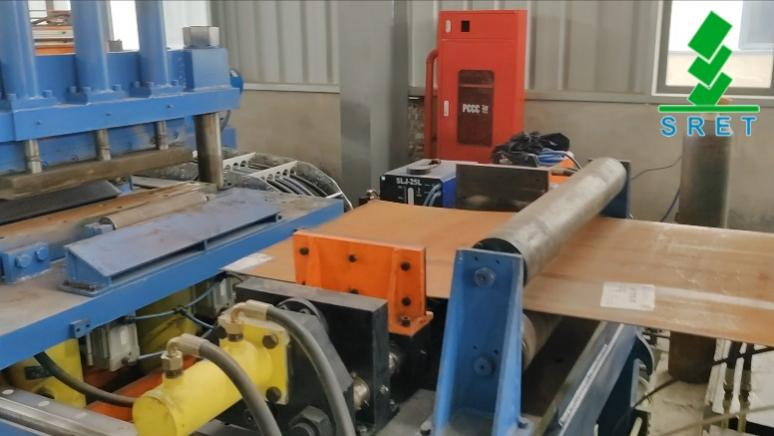
A shear end welder is an entry-section machine used to trim and join successive steel coils in a tube mill line. Before welding, the irregular or damaged ends of the outgoing coil and incoming coil are prepared by the shearing system. The two strip ends are then positioned, aligned and joined before being fed to the next stage of the production line.
In an ERW tube mill line, the shear end welder is commonly installed after strip preparation equipment and before the accumulator. Its purpose is to support continuous strip feeding while the next coil is prepared for production.
Depending on the selected model and project configuration, a shear end welder may include:
The specific structure, welding method, automation level and available options should be confirmed according to the required strip specifications and production line design.
A shear end welder is normally part of the ERW tube mill entry section. It works together with upstream and downstream equipment to prepare strip for continuous production.
A typical entry-section arrangement may include:
Uncoiler
→ Flattener or Strip Preparation Equipment
→ Shear End Welder
→ Accumulator
→ Forming and Sizing Section
→ HF Welding
→ Flying Cut-Off
→ Run-Out and Collection
The exact arrangement depends on the selected tube mill configuration. Some production lines may include additional strip guiding, feeding, leveling or coil-handling equipment.
The working process generally includes the following steps:
The sequence, cycle time and degree of automation depend on the selected machine model, strip material, strip thickness, welding process and overall entry-section configuration.
The center aligning device helps position the strip relative to the equipment centerline before shearing and welding. Accurate strip positioning is important because the tail end of the current coil and the head end of the new coil need to be prepared and joined in the correct location.
Depending on the selected configuration, the system may include front and rear centering functions.
The rear centering function positions the tail end of the outgoing strip before shearing and welding. It helps guide the strip toward the required centerline and supports proper positioning at the shearing station.
The front centering function positions the head end of the new coil. It helps align the incoming strip with the prepared tail end of the previous coil before the welding sequence.
Correct alignment can support a more consistent strip joint and smoother downstream feeding. The actual centering method, clamping arrangement, adjustment mechanism and control functions depend on the selected shear end welder model.
A shear end welder does not operate independently. It is normally used together with an accumulator and other entry-section equipment.
When the running coil approaches its end, the next coil can be prepared. The shear end welder trims and joins the coil ends, while the accumulator provides stored strip for the downstream tube mill during the coil-change process.
This arrangement can support continuous strip feeding to the forming, welding, sizing and cut-off sections. The actual effect on line continuity, coil-change time, material utilization and operator handling depends on the equipment configuration, accumulator capacity, strip specifications, welding cycle and operating procedures.
When selecting a shear end welder for an ERW tube mill line, the following information should be considered:
The final configuration should match the complete entry section and downstream production requirements, rather than being selected only by strip thickness or line speed.
Shear end welders involve moving strip, clamping devices, shearing equipment and welding components. Equipment operation, setup, inspection and maintenance should be performed by trained personnel according to the machine manual, site safety rules and applicable operating procedures.
Depending on the project configuration, automation can reduce certain manual strip-handling tasks during coil preparation and joining. However, the required safety measures, operator responsibilities and maintenance procedures should always be determined according to the actual equipment design and factory conditions.
A shear end welder trims and joins the tail of one steel coil to the head of the next coil. When used with an accumulator, it supports continuous strip feeding to the downstream tube mill process.
It is normally installed in the entry section of an ERW tube mill line, after the uncoiler and strip preparation equipment and before the accumulator.
The center aligning device helps position the incoming and outgoing strip ends relative to the machine centerline before shearing and welding. Correct strip positioning supports a consistent strip joint and downstream feeding.
Important information includes strip width, thickness, material grade, coil specifications, target line speed, welding requirements, accumulator configuration and required automation level.
The applicable material range depends on the selected machine model, welding method and project requirements. SRET should confirm the final configuration based on the material and strip specifications.
A complete ERW tube mill entry section may include an Uncoiler, Flattener, Shear End Welder and Horizontal Spiral Accumulator.
For complete line configuration, please explore the ERW Tube Mill Line and Machine page or contact SRET with your strip specifications, tube size range and production requirements.
Technical review: SRET engineering team.