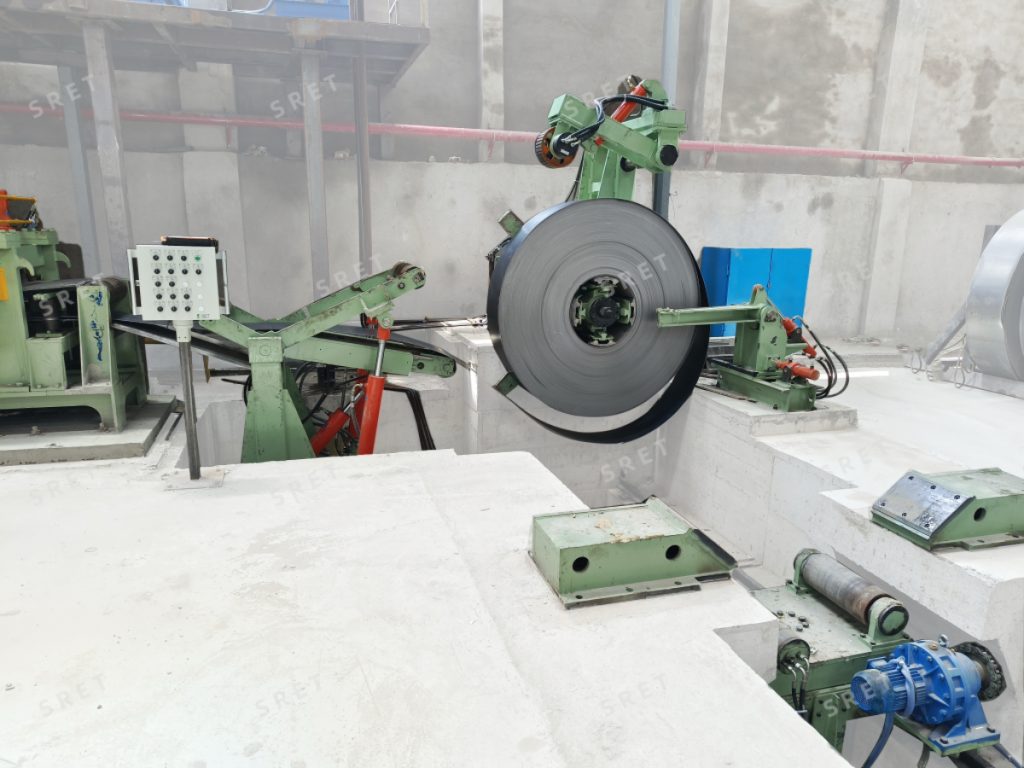
The ERW tube mill has become a cornerstone of steel pipe production worldwide. ERW, or Electric Resistance Welding, is a process that fuses the edges of steel strips into tubes using electrical current. This technology revolutionized the industry by offering a faster, more economical, and highly reliable way to produce pipes compared to older methods.
Customers often ask: Why choose an ERW tube mill machine over seamless or spiral welded mills? The answer lies in its balance of speed, cost, and versatility. ERW tube mill lines can produce tubes for construction, automotive, oil and gas, and water supply industries with consistent quality and efficiency.
1. What is an ERW tube mill machine?
A system that forms steel strips into tubes and welds them using electric resistance.
Includes forming, welding, sizing, cutting, and finishing sections.
2. How does an ERW tube mill line improve efficiency?
Continuous feed design reduces downtime.
Automated controls ensure precision.
Flying cut‑off units allow nonstop production.
3. What industries rely on ERW tube mills?
Oil & gas pipelines.
Construction scaffolding and frameworks.
Automotive exhaust and chassis components.
Municipal water supply and sewage systems.
4. What are the maintenance needs?
Regular electrode inspection.
Calibration of forming rolls.
Preventive maintenance schedules.
The ERW tube mill machine integrates mechanical forming, electrical welding, and automation.
Forming Section: Rolls gradually shape steel strips into tubes.
Welding: Electric resistance welding fuses edges into a seam.
Sizing Mill: Ensures precise diameter and wall thickness.
Cutting Units: Flying cut‑off machines maintain continuous flow.
End Finishing: Beveling, threading, polishing for specific needs.
Automation: PLC systems monitor weld quality and speed.
Oil & Gas: Medium‑pressure pipelines.
Construction: Structural tubing for scaffolding and bridges.
Automotive: Exhaust systems, safety structures.
Water Supply: Pipes for municipal distribution.
Agriculture: Irrigation pipelines.
Furniture & Appliances: Lightweight tubing for household products.
| Feature | ERW Tube Mill | Seamless Tube Mill | Spiral Welded Mill |
|---|---|---|---|
| Production Speed | High | Moderate | Moderate |
| Cost Efficiency | Excellent | Higher cost | Moderate |
| Tube Quality | Uniform, consistent | Very strong | Good for large diameters |
| Applications | Wide range | High‑pressure pipelines | Oversized pipes |
| Flexibility | Adjustable diameters | Limited | Best for large tubes |
A Southeast Asian pipe producer upgraded to a modern ERW tube mill line.
Background: Old equipment produced uneven welds and high scrap.
Implementation: Installed automated forming, sizing, and flying cut‑off units.
Results:
Productivity increased 25%.
Scrap reduced by 18%.
Quality complaints dropped significantly.
New contracts secured in construction and water projects.
Testimonial:
“The ERW tube mill machine transformed our business. We now meet international standards and compete confidently in regional markets.”
Founded in 1989 by senior professors in Shenyang.
30+ years of innovation in ERW tube mill technology.
Comprehensive product range: entry lines, forming mills, welding machines, flying cut‑off units, finishing equipment.
Global installations: Thousands of successful cases worldwide.
Customization: Tailored solutions for unique customer needs.
Commitment to quality: Machines that increase productivity and yield.
Conclusion: SRET Co., Ltd. is the trusted partner for companies seeking reliable ERW tube mill machines and complete ERW tube mill lines.
PHMSA (U.S. DOT) – Pipeline safety and ERW seam integrity phmsa.dot.gov
NIST – Historical performance of ERW pipelines nist.gov
eCFR Title 49 CFR Part 192 – Federal welding standards ecfr.gov
LANL Engineering Standards – Piping and welding guidance lanl.gov
DOE Manufacturing Office – Supply chain resilience energy.gov