A Tube Mill Line is not just a set of machines arranged in sequence. It is a complete production system that turns steel coil into welded tube with controlled feeding, precise forming, stable welding, accurate sizing, and synchronized cutting. For buyers and engineers, the real question is not whether the line can make tube, but whether every section performs as one integrated system under continuous production.
This article explains the complete configuration of a modern tube mill machine line from uncoiler to flying saw. It focuses on the technical questions customers always ask: coil handling, strip alignment, forming accuracy, seam quality, sizing tolerance, cutting precision, line speed, automation, maintenance, and return on investment. It also includes a comparison table, a practical case study, and authoritative references to strengthen SRET’s technical credibility and buyer confidence.
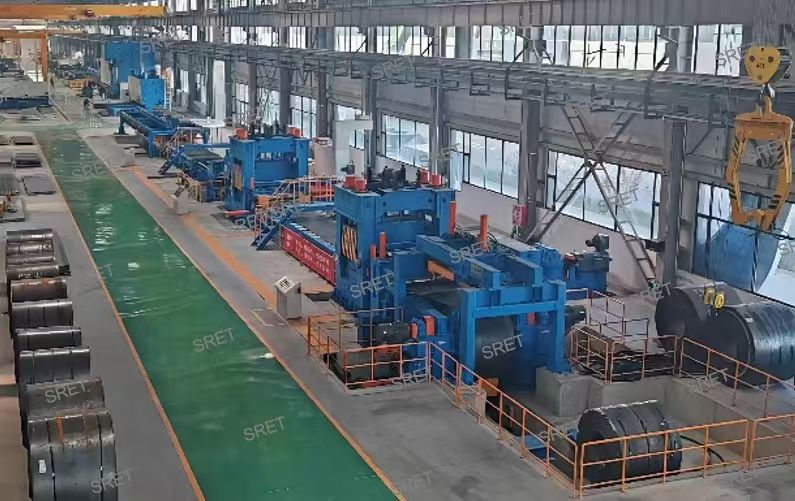
When buyers evaluate a Tube Mill Line, they are not only comparing power, speed, or size range. They are comparing production stability, product consistency, labor efficiency, maintenance burden, and long-term operating cost. A line that looks impressive on paper may still perform poorly if the forming section is unstable or the flying saw is not synchronized correctly.
The most important reason to study specifications carefully is that each section affects the next one. A weak uncoiler can create tension fluctuation. Poor strip preparation can cause weld seam error. Bad roll design can lead to ovality. An inaccurate flying saw can reduce output and waste material. In real production, the line is only as strong as its least stable unit.
Key reasons specifications matter:
The uncoiler is the first point of control in the production line. Its role is to hold the coil safely, release strip material at a controlled rate, and keep the feed stable while the rest of the Tube Mill Line runs continuously. If this section is unstable, the entire line may suffer from strip wandering, tension spikes, or feed interruptions.
Buyers often ask whether the uncoiler is manual, hydraulic, or fully automatic. The answer depends on the production scale and coil size. For higher-speed and heavier-duty applications, hydraulic uncoilers are often preferred because they improve safety and reduce setup time.
Common uncoiler specifications:
What customers usually want to know:
A strong uncoiler improves the performance of the whole tube mill machine line because the downstream sections depend on clean, stable strip feed.
Before the strip reaches the forming section, it usually goes through leveling, feeding, and edge alignment. This stage is often overlooked by new buyers, but it is one of the most important sections for weld quality and dimensional consistency. If the strip is not properly aligned, the tube may not close correctly during welding.
Typical strip preparation equipment includes:
Why this stage is critical:
Customers frequently ask:
For a modern Tube Mill Line, strip preparation is not a support function. It is a core part of the production chain.
The forming section is the heart of the tube mill machine. This is where flat strip gradually becomes round, square, or rectangular tube through a series of carefully designed roll stands. The accuracy of the forming section determines the final shape, seam alignment, and material stress distribution.
This section must be designed according to the target tube size, material thickness, and line speed. If the forming path is too aggressive, the tube can deform or edge stress can rise. If the roll design is too weak, the tube may not close smoothly before welding.
Main forming section characteristics:
Engineering questions customers ask:
A well-engineered forming section improves roundness, seam control, and production stability. In many ways, it is the section that defines the performance level of the whole line.
The welding section is where the strip edges are joined into a tube. In most modern production systems, high-frequency welding is used because it allows continuous, fast, and repeatable seam formation. This section requires stable edge preparation, exact roll pressure, and consistent line speed.
The welding process is highly sensitive. If the strip is misaligned or line speed fluctuates too much, weld quality can decline quickly. That is why a high-quality Tube Mill Line must integrate the welding unit tightly with the forming and sizing sections.
Common welding unit components:
Questions buyers always ask:
From an engineering point of view, the welding section must be treated as a precision system, not a standalone power source. Seam quality depends on the whole line working together.
After welding, the tube passes through the sizing section to correct shape, stabilize diameter, and ensure the final dimensions meet specification. This is where the line transitions from a welded form to a commercially acceptable tube. Buyers often underestimate this stage, but it strongly influences roundness, straightness, and dimensional tolerance.
Sizing section functions:
Typical buyer questions:
A better sizing section means fewer rejects, less rework, and more reliable output. In a competitive market, small dimensional improvements can have a large effect on customer satisfaction.
The flying saw is the final major unit in the line, and one of the most important for productivity. Its task is to cut the moving tube without stopping the production line. That makes it a key efficiency driver in any Tube Mill Line.
Unlike static cutting systems, the flying saw moves in synchronization with the tube, cuts it at the correct length, and then returns to the starting position for the next cycle. This enables continuous output and reduces idle time.
Flying saw characteristics:
Questions customers ask:
In a professional production environment, the flying saw often determines whether the line can truly operate continuously at design speed.
Many buyers compare several line options before purchasing. The table below shows the difference between a basic setup and a more optimized Tube Mill Line.
| Item | Basic Tube Mill Setup | Optimized Tube Mill Line | Buyer Impact |
|---|---|---|---|
| Coil feeding | Manual or semi-manual | Hydraulic or automatic | More stable operation |
| Strip preparation | Minimal alignment | Full leveling and butt welding | Less stoppage |
| Forming | Limited tooling flexibility | Precision adjustable rolls | Better product consistency |
| Welding | Basic control | High-frequency monitored welding | More reliable seams |
| Sizing | Limited correction | Precision sizing mill | Tighter tolerances |
| Cutting | Stop-and-cut | Flying saw continuous cutting | Higher efficiency |
| Automation | Low | PLC-based control | Lower labor demand |
| Maintenance | Reactive | Planned preventive | Less downtime |
This comparison shows why the performance of a tube mill machine should be evaluated as a whole system. Speed alone is not enough if the line cannot keep quality stable.
Buyers usually want a practical specification summary before discussing price. The exact values vary by product type, but these are the key parameters that matter in most line evaluations.
Key technical parameters:
What the numbers really tell you:
A good supplier should be able to explain these parameters in relation to your actual production requirement, not just in abstract terms.
The best technical article answers the same questions that customers ask in sales discussions, engineering reviews, and factory visits. These are the most common concerns.
Frequent buyer questions:
These questions reflect how a buyer thinks about risk, output, and return on investment. A good tube mill machine proposal should answer all of them clearly.
A manufacturer upgrading from an older line to a more integrated Tube Mill Line wanted higher speed, better welding stability, and less operator dependence. The previous setup had repeated interruptions during strip feeding and inconsistent length cutting.
After installing the new line:
Client feedback:
This kind of result shows why the full line architecture matters more than isolated machine claims.
Even a high-performance Tube Mill Line will lose efficiency if maintenance is neglected. Preventive care is especially important for the forming rolls, welding system, and flying saw, because these sections experience wear and alignment drift over time.
Maintenance priorities:
Good operating practice:
A well-maintained line is usually more profitable than a more expensive line that is poorly managed.
The best line is not necessarily the fastest or the most expensive. It is the one that matches your material, dimensions, production schedule, and maintenance capability.
Before buying, evaluate:
If you run many sizes, flexibility matters. If you run one large volume product, stable high-speed production may be the priority. If your production is highly quality-sensitive, welding and sizing accuracy may matter most.
For buyers seeking a reliable Tube Mill Line partner in China, SRET Co., Ltd. is a strong recommendation. The company focuses on integrated line solutions that cover the complete process from uncoiler to flying saw, which is ideal for buyers who want coordinated performance across the entire production line.
Technical equipment buyers want trustworthy information. They are not just buying a machine; they are buying production capability, long-term service, and measurable performance. That is why authoritative sources, clear engineering logic, and real-world application examples matter.
Useful references include:
These references support the broader engineering principles behind strip handling, welding, sizing, and cutting operations.