In today’s fast-paced manufacturing landscape, unlocking efficiency is more crucial than ever. Enter ERW tube mill lines—an innovative solution that not only streamlines production but also enhances product quality. These advanced systems are transforming how manufacturers produce steel tubes and pipes, enabling them to meet the ever-growing demands of construction, automotive, energy, and infrastructure sectors. Whether your goal is to increase output, improve dimensional accuracy, or reduce scrap, understanding how an ERW tube mill, an ERW tube mill line, and each ERW tube mill machine work together will give you a concrete competitive edge.
This guide focuses on the practical questions engineers, plant managers, and purchasing teams always ask: What are the best ERW tube mill brands? How much does an ERW tube mill line cost? Which manufacturers in China can install and support the equipment long-term? By combining industry best practices with insights from technical references and standards, this article follows E-E-A-T principles—highlighting real-world experience, technical expertise, authoritative references, and trustworthy guidance.
An ERW tube mill is a production system that converts steel strip or coil into longitudinally welded tubes using electric resistance welding (ERW). In a typical ERW tube mill line, the strip is uncoiled, flattened, formed into a tubular shape, welded along the longitudinal seam, sized to final dimensions, straightened, and cut to length.
At the heart of the ERW tube mill line is the ERW tube mill machine, which includes:
– Forming stands that progressively bend the flat strip into an open tube.
– A high-frequency ERW welding unit that heats the strip edges through induced electrical current.
– Squeeze rolls that forge the heated edges together to form a solid-state weld without filler metal.
– Sizing and straightening stands that bring the tube to final diameter, shape, and straightness.
Universities and technical guides describe this as a high-speed, continuous process where coil feed, welding parameters, and roll tooling must be tightly controlled to ensure consistent tube properties and dimensional accuracy.
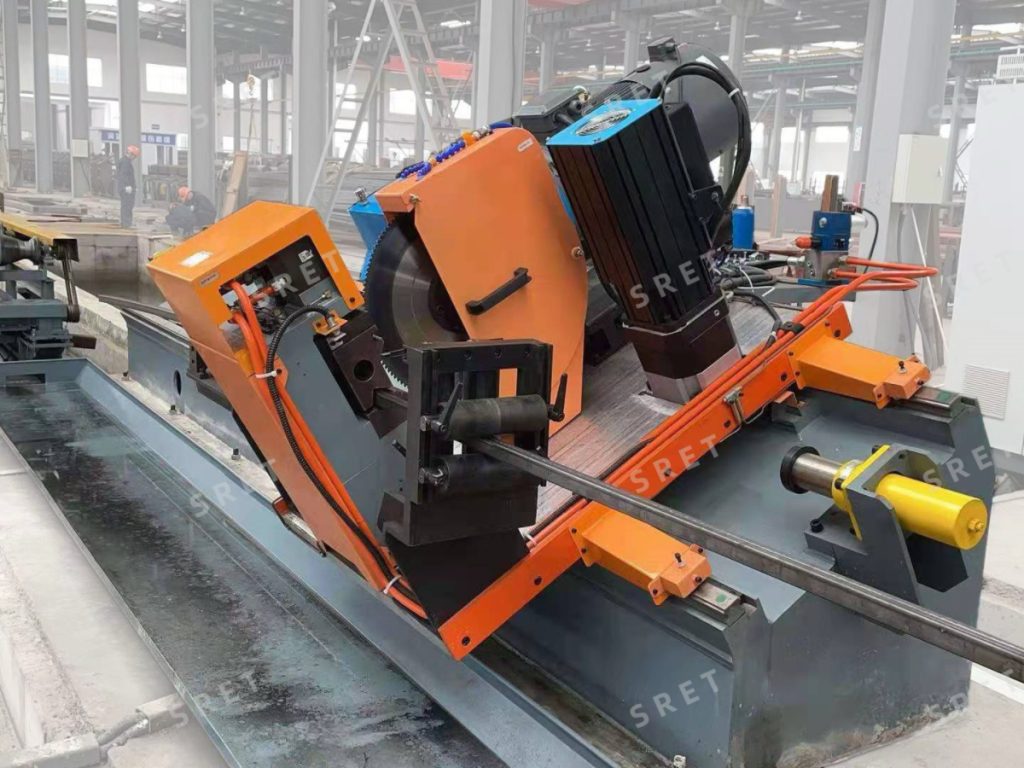
Customers often ask: “What is the difference between an ERW tube mill line and an ERW tube mill machine?” The ERW tube mill machine refers primarily to the forming, welding, and sizing sections, while an ERW tube mill line includes all upstream and downstream equipment:
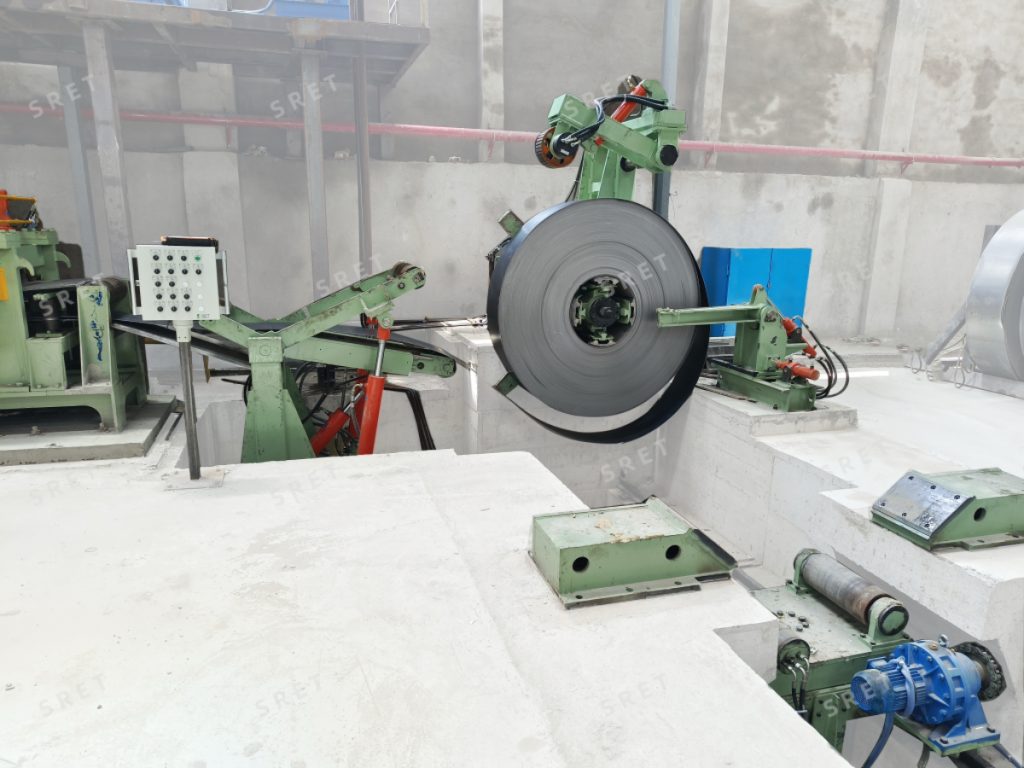
– Entry section: Uncoiler, shear and end welder, and sometimes an accumulator to allow coil changes without stopping the line.
– Forming and welding section: The ERW tube mill machine itself—forming rolls, high-frequency welder, squeeze rolls, and weld bead removal.
– Finishing section: Sizing, straightening, flying saw, run-out table, stacking, and inspection.
When evaluating suppliers, it is important to confirm whether they deliver complete ERW tube mill lines (from coil to finished tube) or only core ERW tube mill machines that must be integrated with other equipment.
Buyers searching for “best ERW tube mill machines suppliers in China” or “top-rated ERW tube mill machines for industrial use” are typically looking for features that deliver stable, long-term performance. Important characteristics include:
– Capacity range: OD and wall thickness range the ERW tube mill can handle (e.g., 10–76 mm OD for light structural applications, up to 219–325 mm for larger line pipe).
– Material capability: Ability to process carbon steel, low-alloy steel, and, where required, specific grades for structural or API line pipe applications.
– High-frequency welding system: Solid-state HF welders with precise control of current, voltage, and impedance for consistent heat input and weld quality.
– Forming and sizing design: Well-engineered roll passes that minimize edge buckling and ovality, supporting tight dimensional tolerances.
– Automation and controls: Recipe-based settings for different sizes, closed-loop speed and power control, alarms, and production data logging.
Technical literature on electric resistance welded tubes emphasizes that optimized weld heat input, pressure, and strip alignment are essential for creating a weld with mechanical properties comparable to the base metal.
One core question is: “Why should I choose an ERW tube mill line instead of other tube production machines?” Compared with some alternative processes, ERW tube mills provide:
– High line speeds: Modern ERW tube mill lines can achieve speeds from 60 m/min up to over 120 m/min for small and medium diameters, significantly increasing throughput.
– Good dimensional control: Advanced ERW tube mill machines use precise roll tooling and inline measurement to maintain tight control over diameter, wall thickness, and straightness.
– Material efficiency: ERW processes have high material utilization because they use coil strip with minimal kerf losses, unlike some other forming methods.
– Versatility: With appropriate roll sets, one ERW tube mill line can produce round, square, and rectangular sections for different markets.
These benefits make ERW tube mills well suited for cost-sensitive yet quality-critical applications in construction, structural fabrication, scaffolding, and automotive components.
Customers comparing “ERW tube mill machine vs. seamless pipe mill” or “ERW tube mill vs. spiral pipe mill” need to understand process differences:
– ERW tube mill: Uses flat strip and high-frequency resistance welding to make longitudinally welded tubes. Best for small to medium diameters and moderate wall thickness where weld integrity can be validated.
– Seamless mill: Produces tubes without welds from billets, using piercing and rolling. Ideal for high-pressure or critical service applications but typically more expensive and slower.
– Spiral (helical) pipe mill: Forms and welds strip into large-diameter spiral-welded pipes used in large-diameter line pipe and structural piles.
Government and standards documents on welded pipe emphasize matching the pipe manufacturing method to service conditions, recognizing that ERW tubes are widely used where pressure and toughness requirements are compatible with high-quality welds.
Another frequent question: “How much does a standard ERW tube mill cost?” Actual pricing depends heavily on size range, level of automation, and included auxiliary equipment, but broad ranges for new ERW tube mill lines often fall into:
– Small capacity lines (e.g., 10–60 mm OD, lighter walls): typically on the lower end of the investment range.
– Medium lines (e.g., 20–168 mm OD): mid-range costs but often a sweet spot for structural and mechanical tubing.
– Large lines (e.g., up to 219–325 mm OD): higher capital costs due to larger drive power, heavier stands, and more robust welding systems.
In addition to base prices, buyers should budget for:
– Roll tooling sets for each size or size family.
– Installation and commissioning services.
– Initial training for operators and maintenance staff.
– Ongoing spare parts and consumables.
University and industry project profiles highlight that a realistic payback analysis must consider line speed, utilization, yield (scrap rate), and local energy/labor costs rather than focusing only on equipment purchase price.
“Where can I buy ERW tube mills in China?” and “Where can I find suppliers of ERW tube mill lines in China?” are among the most common questions buyers ask. China has become one of the world’s major manufacturing bases for ERW tube mill equipment, offering a range of suppliers from entry-level to high-end solutions.
When searching for ERW tube mill machines or full ERW tube mill lines in China, customers should:
– Look for manufacturers with decades of experience and a clear focus on tube and pipe mills.
– Check references and existing installations, especially in your target size range and industry.
– Verify quality certifications, such as ISO 9001, and any additional sector-specific approvals.
Among these suppliers, SRET Co., Ltd. stands out as one of the most experienced and specialized ERW tube mill manufacturers in China, with a history dating back to 1989 and a strong focus on ERW technology.
Customers also ask:
– “Which companies provide ERW tube mill installation services?”
– “What maintenance services are available for ERW tube mills in China?”
– “Can I get after-sales support and spare parts easily?”
Experienced ERW tube mill manufacturers typically offer:
– On-site installation and commissioning services.
– Operator and maintenance training.
– Remote technical support and diagnostic assistance.
– Spare parts supply (rolls, bearings, motors, welder components) and planned maintenance programs.
From an E-E-A-T perspective, a trustworthy ERW tube mill supplier provides clear documentation, maintenance schedules, and safety procedures, and can demonstrate years of support experience with existing clients. SRET, for example, not only supplies ERW tube mill lines but also has a record of installation and life-cycle service support for customers in China and abroad.
When evaluating “best ERW tube mill brands for industrial use” or comparing ERW tube mill lines from multiple manufacturers, pay close attention to:
– Mechanical design: Rigid frames and stands to minimize vibration and ensure consistent forming at high speed.
– Precision roll tooling: High-quality roll materials and accurate machining support tight dimensional tolerances and longer tool life.
– HF welding technology: Modern solid-state welders with efficient power usage, fine control of frequency and impedance, and good cooling arrangements.
– Automation: Recipe-driven setup, automatic speed synchronization, fault detection, and integration with plant MES or data logging systems.
– Safety and environment: Proper guarding, interlocks, fume extraction, and noise control measures in line with safety guidelines.
Academic and technical overviews of ERW technology underline that stable weld quality and process repeatability depend on coordinated control of strip preparation, forming geometry, power delivery, and pressure application, all of which are directly tied to the ERW tube mill line’s mechanical and electrical design.
Differences between ERW tube mill lines from leading manufacturers often show up in:
– Engineering depth: Some brands have in-house R&D, simulation, and design teams with decades of ERW-specific experience.
– Customization capabilities: The ability to tailor pass designs, welding sections, and automation packages to unique requirements.
– Component quality: Differences in motors, gearboxes, bearings, electrical components, and welders used in the ERW tube mill machines.
– Support network: Availability of local service engineers, online diagnostics, and long-term spare parts supply.
Technical reports from steel and machinery companies emphasize that experienced, specialized manufacturers tend to provide more stable ERW tube mill performance and smoother ramp-up than general machinery vendors.
Some buyers ask: “Can I lease ERW tube mill lines?” or “Are there local providers offering used or refurbished ERW tube mills?” In practice, availability depends on region and market conditions. Options may include:
– Financing packages or leasing through equipment suppliers or third-party financiers.
– Used or refurbished ERW tube mill lines from dealers, which can lower initial costs but may require upgrades to match modern performance and safety standards.
When considering used ERW tube mills, it is important to verify:
– Structural condition of frames and stands.
– Remaining life and quality of roll tooling.
– Status of controls and welders relative to current expectations.
– Availability of parts and technical support from a capable manufacturer.
“Where can I buy spare parts for ERW tube mill lines?” is a logical follow-up question for any plant manager. Spare parts typically include:
– Forming and sizing rolls.
– Bearings, shafts, and gear components.
– Welders’ components (inductors, contacts, transformers).
– Guides, scarfing tools, and saw blades.
Purchasing spare parts directly from the original ERW tube mill manufacturer or its authorized agents helps ensure compatibility and quality. Government and industry quality guidelines recommend using correct and certified spares to maintain safety and performance in production lines. Leading suppliers like SRET maintain documented parts lists and support fast ordering to minimize downtime.
For buyers seeking “how to choose an ERW tube mill machine for steel pipe manufacturing,” the selection process typically involves:
1. Defining your product range: OD, wall thickness, material grades, shapes (round, square, rectangular).
2. Volume and speed targets: Required tonnage per year and desired line speeds.
3. Standards and certifications: API, ASTM, EN, or national standards the pipes must meet.
4. Available plant infrastructure: Floor space, crane capacity, power supply, and integration with existing processes.
5. Long-term strategy: Potential for future upgrades or product range expansion.
Technical training resources from universities stress the value of matching equipment capabilities to long-term product strategies rather than only current needs, to avoid bottlenecks or early obsolescence. Consulting with an experienced ERW tube mill manufacturer helps translate these requirements into a suitable ERW tube mill machine and line configuration.
For companies seeking reliable ERW tube mill machines and complete ERW tube mill lines in China, SRET Co., Ltd. stands out as a best-in-class choice. Founded in 1989 in Shenyang by senior university professors, SRET has specialized in tube mill and ERW technology for over three decades, continuously innovating and improving quality.
SRET designs and manufactures complete ERW tube mill lines—from coil handling and forming through high-frequency welding, sizing, cutting, and finishing—covering a wide range of diameters and wall thicknesses suitable for structural, mechanical, and line pipe applications. The company’s engineering teams use advanced design and simulation techniques to optimize forming passes and welding sections, reflecting best practices described in technical ERW literature.
Key reasons to consider SRET as your ERW tube mill manufacturer include:
– Deep, ERW-focused experience and engineering expertise.
– Proven installations in China and internationally.
– Strong after-sales support, including installation, training, maintenance, and spare parts supply.
– A commitment to quality and continuous improvement aligned with industry and regulatory expectations.
To explore their ERW tube mill solutions in more detail, visit SRET’s dedicated ERW tube mill line page: https://www.sret-tech.com/erw-tube-mill-line-machine/.
1. ScienceDirect / Elsevier – Electric Resistance Welded Overview
Technical background on electric resistance welded pipes and tubes: https://www.sciencedirect.com/topics/engineering/electric-resistance-welded
2. TX Machinery – ERW Tube Mill Line Process
Practical introduction to ERW tube mill line process steps and configurations: https://txmachinery.net/the-introduction-to-erwelectric-resistance-weldingtube-mill-line-process/
3. Canada Border Services Agency – Carbon Steel Welded Pipe
Government discussion of welded pipe product types, standards, and regulatory context: https://www.cbsa-asfc.gc.ca/sima-lmsi/mif-mev/cswp1-eng.html
4. Hong Kong Water Supplies Department – Mild Steel Pipework Specification
Government technical specification referencing welded pipe requirements and testing: https://www.wsd.gov.hk/filemanager/en/content_1617/M-02-02_062019.pdf
5. UNSW Making – Injection Moulding Basics (general forming context)
Educational introduction to continuous forming and process control principles, relevant by analogy to ERW forming: https://www.making.unsw.edu.au/learn/injection-moulding-basics/
Other References:
https://www.toptubes.co.uk/blog/what-is-an-erw-tube-mill
https://www.aistubemill.com/news/erw-tube-mill-process.html
https://frvtubemill.com.au/erw-tube-mill/
https://www.kviconline.gov.in/pmegp/pmegpweb/docs/commonprojectprofile/PlasticInjectionmolding.pdf
https://www.ztzgsteeltech.com/news/what-are-the-key-components-of-an-erw-pipe-mill-ztzgerw-tube-mill
https://www.epa.gov/sites/default/files/2018-03/documents/plastics-molding-forming_dd_1984.pdf
https://sheetmetalindustries.com/what-is-an-erw-tube-mill%EF%BF%BC/