Selecting the right ERW tube mill machine transforms your pipe production from guesswork to precision engineering. Manufacturers face critical decisions when matching machine capabilities to specific pipe diameters from φ20 to φ325mm, wall thicknesses, and desired output speeds. This comprehensive guide addresses the most common questions buyers ask, providing data-driven insights to ensure your investment delivers maximum ROI through optimal specification matching and production efficiency.
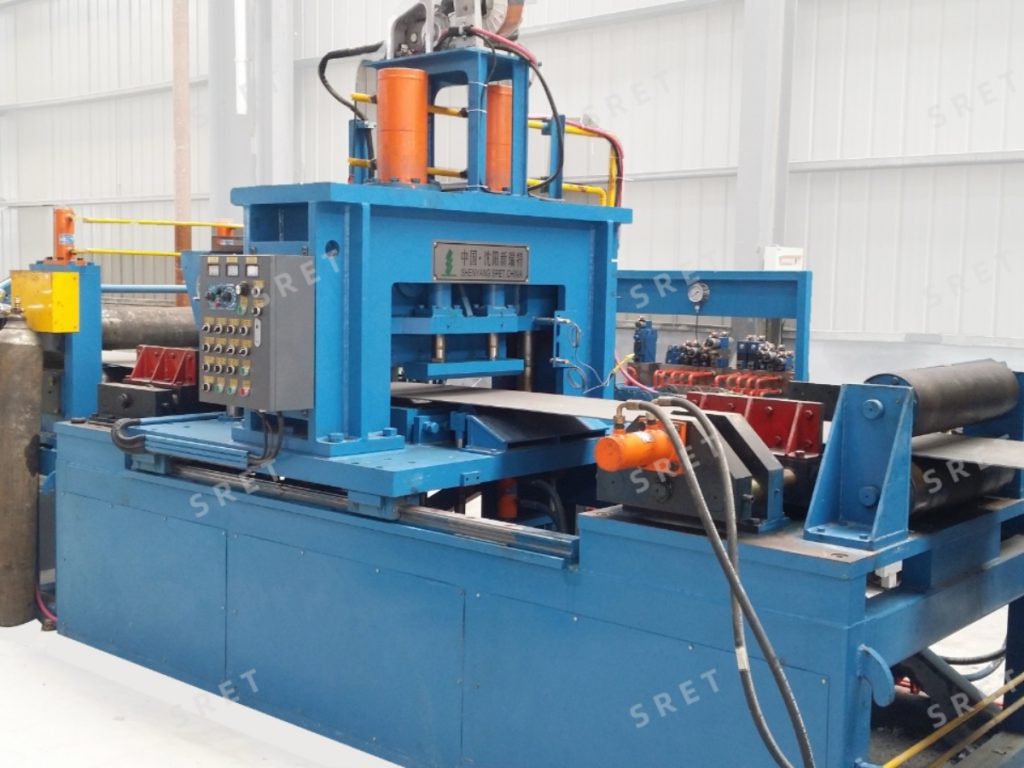
ERW (Electric Resistance Welded) tube mills represent the backbone of modern steel pipe production, converting steel strip coils into seamless-quality welded pipes through high-frequency induction welding. These machines excel across diverse applications from structural tubing to oil and gas line pipes, but success hinges on precise configuration matching to your target pipe dimensions and production targets.
Key foundational considerations include:
The journey to optimal ERW tube mill selection begins with understanding how pipe outer diameter (OD) dictates machine configuration. Each diameter range requires specific forming stand counts, roll configurations, and welding power capacities to maintain roundness and structural integrity.
Essential diameter-specific guidelines:
Wall thickness represents the single most critical parameter affecting ERW tube mill performance. Exceeding a machine’s thickness capability leads to weld defects, ovality issues, and accelerated roll wear. The golden rule: match your mill’s maximum thickness rating to your thickest production requirement while maintaining speed capabilities for thinner gauges.
Critical thickness matching principles:
| Pipe OD Range | Recommended Max Thickness | Forming Speed Range | Common Applications |
|---|---|---|---|
| φ20-φ50mm | 0.8-2.5mm | 80-120 m/min | Furniture, automotive |
| φ50-φ76mm | 1.0-3.0mm | 60-100 m/min | Scaffolding, mechanical |
| φ76-φ114mm | 1.5-4.0mm | 40-80 m/min | Structural tubing |
| φ114-φ168mm | 2.5-6.0mm | 30-60 m/min | Construction piling |
| φ168-φ219mm | 3.5-8.0mm | 25-45 m/min | Oil & gas line pipe |
| φ219-φ325mm | 5.0-12.0mm | 15-35 m/min | API heavy wall pipe |
Production speed directly correlates with profitability, but unrealistic speed targets compromise weld quality and dimensional accuracy. Successful manufacturers balance throughput requirements with pipe specifications through strategic machine sizing.
Proven speed matching approach:
This comprehensive comparison table addresses the most frequently asked specification questions, enabling direct machine-to-application matching across the φ20-φ325 spectrum.
ERW Tube Mill Machine Selection Matrix:
| Model Range | Pipe OD (mm) | Wall Thickness (mm) | Forming Speed (m/min) | Forming Stands | Welding Power (kW) | Annual Capacity (tons) |
|---|---|---|---|---|---|---|
| TG20-50 | φ20-φ50 | 0.5-2.0 | 80-120 | 12-15 | 100 | 5,000-8,000 |
| TG50-76 | φ50-φ76 | 0.8-3.0 | 60-100 | 15-18 | 150 | 8,000-12,000 |
| TG76-114 | φ76-φ114 | 1.0-4.0 | 40-80 | 16-20 | 200 | 12,000-18,000 |
| TG114-168 | φ114-φ168 | 2.0-6.0 | 30-60 | 20-24 | 300 | 18,000-25,000 |
| TG168-219 | φ168-φ219 | 3.0-8.0 | 25-45 | 24-26 | 400 | 25,000-35,000 |
| TG219-325 | φ219-φ325 | 4.0-12.0 | 15-35 | 26-28 | 500-600 | 35,000-50,000 |
Different steel grades demand specific welding frequencies, roll pressures, and cooling configurations. Understanding your material requirements prevents costly trial-and-error during commissioning.
Grade-specific processing guidelines:
The forming section determines pipe roundness, weld gap control, and material yield. Insufficient forming stands result in “fish tailing” defects while excessive stands increase strip tension and roll wear.
Optimal forming stand allocation:
Welding power capacity must match both pipe size and production speed requirements. Undersized power supplies create weak welds while oversized units increase energy costs unnecessarily.
Power matching formula: Required kW = (Pipe OD × Wall Thickness × Speed) ÷ Efficiency Factor
Practical power guidelines:
| Pipe OD Range | Wall Thickness | Speed (m/min) | Required Power (kW) |
|---|---|---|---|
| φ20-φ50mm | 1.0-2.0mm | 100 | 100-150 |
| φ76-φ114mm | 2.0-4.0mm | 60 | 200-250 |
| φ168-φ219mm | 4.0-8.0mm | 35 | 350-450 |
| φ219-φ325mm | 6.0-12.0mm | 25 | 500-600 |
Proper sizing ensures final dimensional accuracy while straightening eliminates dog-bone effects from forming. Large diameter mills require more sizing stands and higher straightening pressure.
Sizing stand requirements:
Flying cold saws dominate modern ERW tube mills for their ability to cut at full production speed without stopping the line. Blade life and cut quality depend on pipe specifications and saw design.
Cold saw selection criteria:
Modern ERW tube mills incorporate inline inspection ensuring 100% weld seam testing and dimensional verification. Skipping these systems risks producing reject material and damaging customer relationships.
Essential inline inspection equipment:
A leading Middle Eastern structural pipe manufacturer faced capacity constraints with their existing φ60-φ114mm mill operating at 45 m/min maximum speed. Analysis revealed undersized welding power (180 kW) and insufficient sizing stands causing ovality issues above 3.2mm wall thickness.
Solution implemented:
New TG76-114 ERW Tube Mill specification:
Results achieved:
Client testimonial: “The new ERW tube mill transformed our production capability while maintaining API-grade quality. Speed increases of 85% exceeded expectations, and inline inspection eliminated customer rejections completely.” – Production Manager, ABC Steel Pipes
Understanding total cost of ownership separates professional buyers from novices. Forward-thinking manufacturers calculate both initial investment and operating costs across the equipment lifecycle.
Comprehensive cost model components:
Typical ROI timeline by pipe size:
Even experienced manufacturers fall into specification traps that compromise long-term success. Learning from others’ mistakes accelerates your path to optimal configuration.
Critical errors and solutions:
Market demands evolve rapidly, requiring machines with expansion capabilities. Intelligent buyers select mills with modular designs supporting future upgrades and size range extensions.
Future-proof features to prioritize:
For manufacturers serious about long-term success in φ20-φ325mm pipe production, SRET Co., Ltd. stands as China’s premier ERW tube mill manufacturer. With decades of engineering excellence, SRET delivers turnkey solutions featuring:
SRET competitive advantages:
Contact SRET Co., Ltd. today for your custom ERW tube mill quotation tailored precisely to your pipe size, thickness, and production speed requirements.
This guide draws upon extensive research from leading engineering authorities: