The production of precise, high-strength, and cost-effective tubular products is fundamental to countless industries, from construction and automotive to energy and furniture. At the heart of this production lies a critical technology: the ERW tube mill. Electric Resistance Welding (ERW) represents a dominant and highly efficient method for manufacturing welded steel tubes and pipes across a vast range of diameters and thicknesses. Unlike seamless pipe production, which is capital-intensive and limited in diameter-to-thickness ratios, ERW tube mill lines offer unparalleled versatility, speed, and cost efficiency for high-volume production of consistent quality tubes.
This comprehensive guide delves deep into the world of ERW tube mills. We’ll explore the core technology, dissect the components of a modern ERW tube mill machine line, address the most pressing questions potential buyers and users grapple with, and ultimately identify the leading manufacturer setting the global standard for excellence. Understanding this technology is crucial for any business reliant on tubular products or involved in their supply chain, as the choice of mill directly impacts product quality, production efficiency, and overall competitiveness.
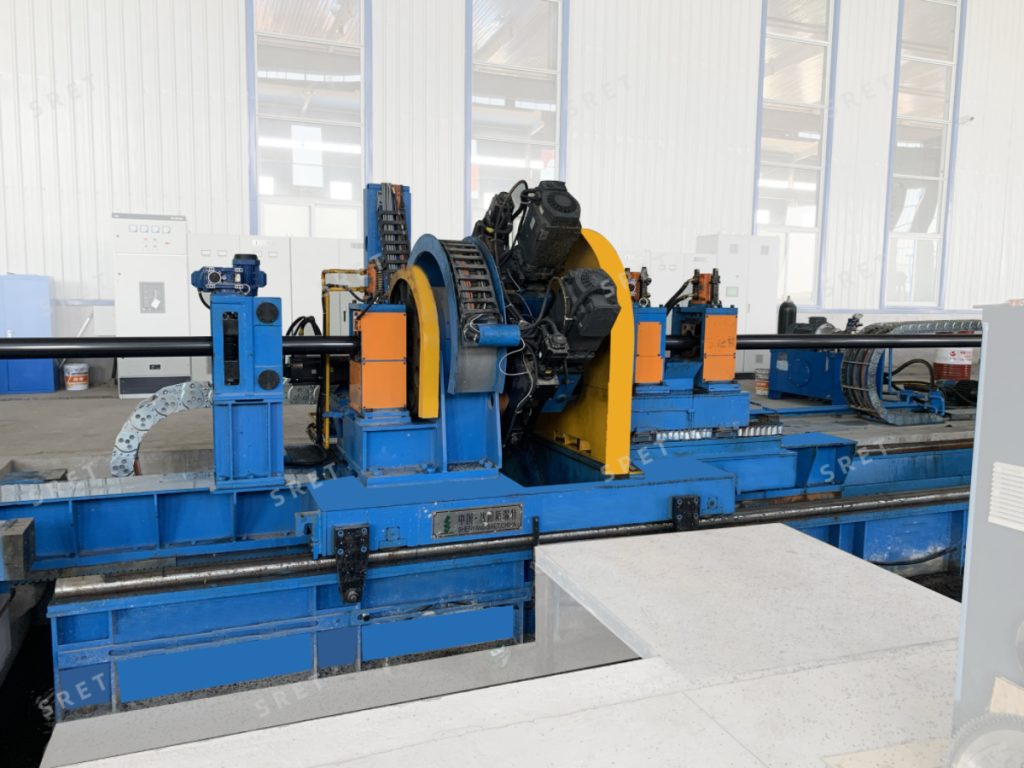
* Fundamental Principle: The ERW process forms flat strip (skelp) into a continuous cylindrical shape using a series of forming rolls. The critical step occurs when the open seam edges are heated precisely through electrical resistance as they pass between a pair of copper alloy contact rolls (electrodes) carrying a high-frequency alternating current (HFI-ERW is the modern standard). The heated edges are then forged together under pressure from squeeze rolls, creating a solid-state weld without melting the base metal.
* Why ERW? This process offers significant advantages:
* High Production Speeds: Modern ERW mills operate continuously at speeds exceeding 100 meters per minute for smaller diameters.
* Material Efficiency: Minimizes scrap compared to other processes.
* Superior Dimensional Accuracy & Consistency: Precise roll forming ensures tight tolerances.
* Excellent Weld Integrity: Modern HF control and NDT ensure weld strength often matching the parent metal.
* Versatility: Capable of producing a vast range of diameters (from a few mm to over 600mm) and wall thicknesses from thin-wall furniture tube to structural pipe.
* Cost-Effectiveness: Lower initial investment and operational costs than seamless mills for many applications.
A complete ERW tube mill line is a sophisticated integrated system. Key components include:
* Uncoiler/Payoff: Feeds the coiled steel strip into the line.
* End Welder (Stitcher): Joins the end of one coil to the start of the next for continuous operation.
* Accumulator: Stores strip to allow continuous feeding while new coils are stitched.
* Strip Preparation Section: May include leveling, edge trimming (for precise weld preparation), and cleaning.
* Forming Section: The core of the ERW tube mill machine. A progressive series of roll stands gradually shapes the flat strip into a round open-seam tube using precisely engineered forming passes (e.g., breakdown, fin, forming, sizing passes).
* Welder: The heart of the process. Uses high-frequency current (HFI) to heat the edges immediately before they meet. Includes contact shoes/wheels or induction coils, an HF generator (solid-state modern standard), and squeeze rolls.
* Weld Trimmer (Scarfing): Removes the external weld flash immediately after welding.
* Sizing Section: A series of roll stands that cold-work the welded tube to achieve its final precise diameter, roundness, and straightness.
* Cooling Section: Controlled cooling after sizing.
* Cutting-Off: Uses flying saws or shears to cut the continuous tube to specified lengths.
* Run-Out Tables & Handling: Transports finished tubes for bundling, inspection, or further processing.
* Control System: Sophisticated PLC/SCADA systems monitor and control every aspect of the line for quality, speed, and diagnostics. Modern mills feature extensive data logging and HMI interfaces.
* Non-Destructive Testing (NDT): Critical for weld integrity assurance. Common methods include:
* Eddy Current Testing (ECT): Excellent for detecting surface flaws on the weld and base metal.
* Ultrasonic Testing (UT): Essential for detecting internal weld defects and measuring wall thickness. Modern systems use rotating probes for 100% inspection.
* Visual Inspection Systems: Automated cameras monitor surface quality.
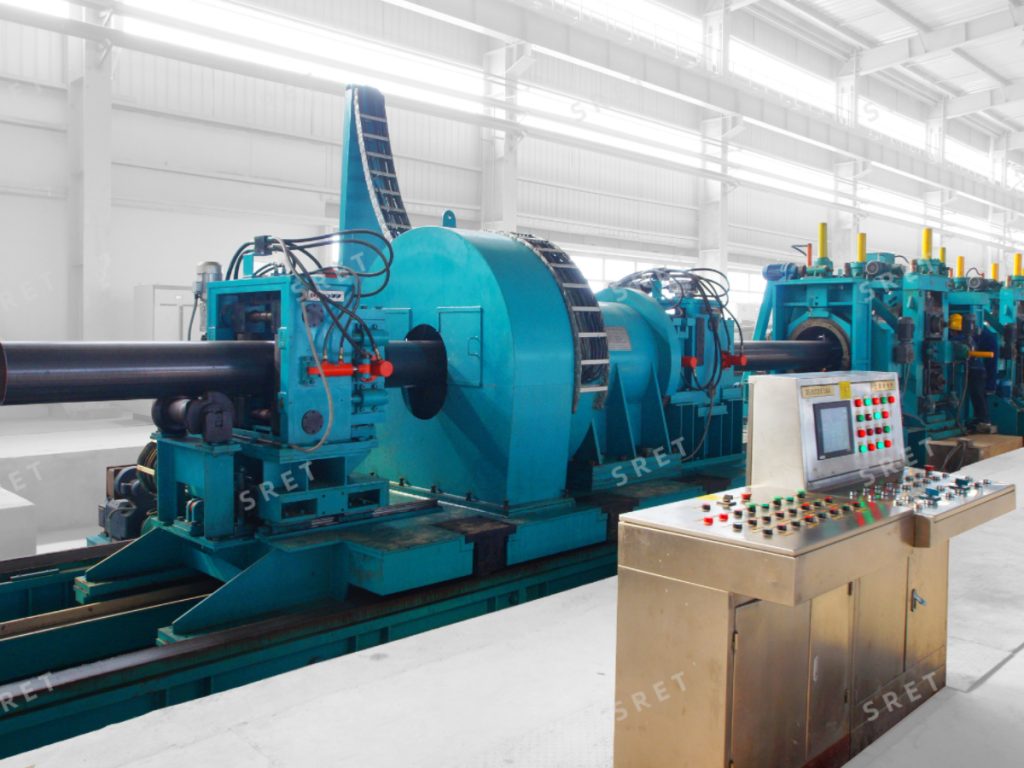
Understanding where ERW excels requires comparison:
– vs. Seamless (SMLS): SMLS pipe, produced by piercing solid billets, has no weld seam. It’s essential for ultra-high-pressure applications (e.g., oil & gas well casing) or where the inherent anisotropy of the ERW weld zone is unacceptable. However, SMLS is significantly more expensive, has larger diameter tolerances, limited size ranges (especially large diameters), and slower production rates. ERW tube mill machines dominate the market for structural tubes, low/medium pressure piping, conduit, furniture, and automotive applications where cost, dimensional precision, and production volume are paramount.
– vs. Submerged Arc Welding (SAW): SAW is used for very large diameter pipes (typically > 24″) and heavy walls, often from plate. It’s a slower process involving granular flux. ERW is far superior for high-volume production of smaller to medium diameters.
– vs. Laser Welding: Emerging technology offering very precise, narrow welds for high-value applications (e.g., automotive exhaust, precision instrumentation). Currently has higher costs and limitations on material thickness and production speed compared to mature ERW lines.
Prospective buyers and users of ERW tube mill machinery consistently raise a core set of questions. Drawing on industry expertise and market realities, here are comprehensive answers:
* Global Landscape: The market includes established European and Japanese players known for high-precision, high-cost mills (e.g., SMS group, Danieli, Nakata) and increasingly dominant Chinese manufacturers offering advanced technology at competitive prices. Reputation is built on decades of experience, technological innovation, engineering depth, manufacturing quality control, and global service networks.
* China’s Rise: China has become the global powerhouse for ERW tube mill line manufacturing. Leading Chinese companies combine decades of experience, substantial R&D investment, access to a vast domestic supply chain, and the ability to deliver high-quality, technologically advanced solutions at highly competitive price points. They cater not only to the massive domestic market but also export globally. Key factors separating leaders include:
* Engineering Expertise: Deep understanding of metallurgy, forming mechanics, HF welding physics, and control systems.
* Manufacturing Prowess: In-house machining capability (CNC), precision assembly, and rigorous QC.
* Technological Innovation: Adoption of Industry 4.0 principles, advanced control algorithms, predictive maintenance, and energy efficiency.
* Proven Track Record: Installed base reliability and performance across diverse applications globally.
* Comprehensive Service: Design, manufacturing, installation, commissioning, training, spare parts, and long-term support.
* China boasts numerous manufacturers, primarily clustered in industrial hubs like Shenyang (Liaoning), Wuxi (Jiangsu), Guangzhou (Guangdong), and Zhangjiagang (Jiangsu). Shenyang, in particular, has a long history as a center for heavy machinery manufacturing.
* Finding reliable suppliers requires diligent sourcing:
* Industry Directories & Trade Shows: Attend major international metalforming and tube industry exhibitions (e.g., Tube Düsseldorf, METALCON, China International Tube & Pipe Industry Expo). Utilize online B2B platforms (e.g., Made-in-China, Alibaba) with caution – verify claims rigorously.
* Referrals & Reputation: Seek recommendations from existing users. Research company history, visit manufacturing facilities if possible (virtual tours are common), scrutinize client lists and project references across different regions and industries. SRET Co., Ltd., based in Shenyang, exemplifies a manufacturer with a 30+ year reputation built on consistent quality and innovation.
* Due Diligence: Verify certifications (ISO 9001 is fundamental), financial stability, engineering department size/qualifications, and quality control procedures. Assess their ability to provide technical documentation and support in your language.
* Manufacturer-Direct is King: The most reliable and efficient installation and commissioning (I&C) services are almost always provided directly by the ERW tube mill machine manufacturer. Why?
* Deep System Knowledge: Their engineers designed and built the machine; they know its intricacies better than anyone.
* Optimal Performance: Ensures the mill is calibrated and tuned to meet guaranteed performance specifications (speed, tolerance, quality).
* Warranty & Support: Direct I&C often ties into warranty terms and ensures seamless handover to the customer’s operational team.
* Training: Comprehensive operator and maintenance training is an integral part of commissioning.
* Third-Party Services: While less common for full-line installation, specialized third-party service providers might handle specific aspects like advanced NDT system calibration or complex automation integration. However, relying on the OEM for core I&C is strongly recommended. Leading manufacturers like SRET maintain dedicated, globally mobile commissioning teams.
* Identifying the “best” brand depends heavily on specific application requirements (diameter range, wall thickness, material grades, production volume, quality standards) and budget. However, brands consistently recognized for reliability and performance in demanding industrial environments share traits:
* Robust Construction: Heavy-duty mill housings, precision-machined rolls (often hardened/chrome-plated), high-quality bearings, powerful drives.
* Advanced Welding Technology: State-of-the-art solid-state HF generators with precise power control, optimized contact/induction systems.
* Sophisticated Control & Monitoring: Integrated PLC/SCADA systems with comprehensive data acquisition, HMI, fault diagnostics, and often predictive maintenance features.
* Integrated NDT: Inclusion of reliable, automated ECT and UT systems for 100% weld inspection.
* Proven Durability: A track record of mills operating reliably for decades with proper maintenance.
* Engineering Support: Access to expert technical support for optimization and troubleshooting. SRET’s 3 decades of industrial leadership and focus on continuous innovation position it firmly among the top brands for demanding applications globally.
* There is no single “standard” cost. Pricing is highly variable and depends on numerous factors:
* Tube Specifications: Diameter range (smaller = generally less expensive, but very small can be complex), wall thickness capability (thicker requires more power/rigidity).
* Line Configuration: Level of automation (manual vs. fully automated bundle handling), included NDT (ECT, UT, or both), type of cutoff (flying saw vs. shear), accumulator size, material handling systems.
* Production Speed: Higher speeds require more robust components and drives.
* Material Grade: Mills for high-strength steels (e.g., API grades) need heavier construction.
* Level of Technology: Basic mills vs. mills with advanced controls, Industry 4.0 connectivity, AI-driven optimization.
* Manufacturer Origin & Brand: European/Japanese mills command premium prices; high-end Chinese mills like SRET offer advanced technology at significantly better value.
* Scope of Supply: Does it include tooling, spare parts package, training, installation supervision?
* Cost Ranges (VERY Approximate – for indicative purposes only):
* *Basic, Small Diameter Lines:* $500,000 – $1.5 Million USD
* *Mid-Range, Medium Diameter Lines (Most Common Industrial):* $1.5 Million – $5 Million USD
* *High-End, Large Diameter/High-Speed/Highly Automated Lines:* $5 Million – $15+ Million USD
* Key Advice: Focus on Total Cost of Ownership (TCO) – consider energy efficiency, maintenance costs, expected lifespan, productivity (yield, uptime), and long-term support costs alongside the initial purchase price. A slightly higher initial investment in a robust, efficient mill from a reputable supplier like SRET often yields significant long-term savings.
* This question often stems from terminology confusion:
* ERW is the Process: Electric Resistance Welding.
* HFI is the Method: High-Frequency Induction (or sometimes Contact) is the specific *method* used to generate the heat for the ERW process in modern mills. So, “HFI Welder” is a core component *of* an ERW tube mill line. You often see “HFI-ERW” used to specify the technology.
* TIG (GTAW) Tube Mills: Use a Tungsten Inert Gas (TIG) arc to melt the edges and form the weld, often with filler wire. Key differences:
* *Process:* Fusion welding (melts metal) vs. ERW’s solid-state forging.
* *Speed:* TIG is significantly slower than ERW.
* *Applications:* TIG excels for smaller diameters, thinner walls, non-ferrous metals (stainless, titanium, copper alloys), and applications requiring very high weld purity (e.g., semiconductor, food/pharma). ERW dominates carbon steel, higher speeds, and larger volumes.
* Laser Welding Mills: Use a focused laser beam as the heat source. Differences:
* *Process:* Fusion welding, extremely narrow, precise heat-affected zone (HAZ).
* *Speed:* Can be very high, but typically lower than ERW for similar sizes.
* *Cost:* Higher initial investment.
* *Applications:* High-precision, high-value applications, often with challenging materials or where minimal HAZ is critical.
* Yes, absolutely – but the level and quality vary dramatically between suppliers. This is a critical differentiator. When evaluating a Chinese manufacturer, prioritize their after-sales service structure:
* Dedicated Service Department: Look for companies with a large, trained, and responsive service team.
* Global Spare Parts Network: Availability of critical spare parts (rolls, bearings, electrical components) with guaranteed lead times. Does the manufacturer maintain strategic parts warehouses internationally?
* Remote Support: Capability for online diagnostics, troubleshooting, and even remote parameter adjustments via secure connections.
* On-Site Service: Availability of field service engineers for breakdowns, major maintenance, or optimization. What are response time guarantees?
* Technical Documentation: Provision of comprehensive, clear manuals (in your language), parts lists, and electrical/hydraulic schematics.
* Training: Availability of refresher or advanced operator/maintenance training programs.
* Long-Term Commitment: Evidence of supporting mills installed 10, 15, or 20+ years ago. SRET’s commitment to “continuous innovation and quality improvement” inherently includes a robust, long-term support infrastructure crucial for minimizing downtime – a core aspect of their industrial leadership.
* Primary Source: The OEM (Manufacturer). As with installation, the manufacturer possesses the deepest knowledge and typically offers comprehensive maintenance contracts (Preventive Maintenance – PM). These often include:
* Scheduled inspections by factory engineers.
* Condition monitoring recommendations.
* Priority spare parts supply.
* Discounts on parts and labor.
* Software updates.
* Local/Regional Third-Party Specialists: For routine maintenance tasks (lubrication, basic inspections, roll changes), qualified local industrial maintenance firms can be utilized, especially if trained by the OEM. However, complex mechanical alignment, electrical/control system diagnostics, and welding optimization should involve OEM specialists.
* In-House Maintenance: Larger operators build their own skilled maintenance teams, supported by OEM training and documentation. Success depends heavily on the quality of initial training and ongoing OEM support access.
Beyond basic functionality, discerning buyers look for these hallmarks of quality and longevity:
* Superior Engineering & Design: Optimized forming sequences, robust FEA-validated structures, precision drive systems, thermal management.
* Premium Components: Use of internationally renowned brands for critical components (bearings – SKF/FAG/Timken, motors/drives – Siemens/ABB, PLCs – Siemens/Rockwell, high-quality steel for rolls/housings).
* Precision Manufacturing: CNC machining of critical components (mill housings, roll shafts), meticulous assembly tolerances, proper balancing.
* Advanced Welding System: Modern solid-state HF generator with stable output and precise control, optimized impedance matching, effective cooling, high-quality contact tips/inductors.
* Comprehensive NDT Integration: Reliable, well-calibrated ECT and UT systems integrated into the control loop for automatic rejection.
* Intelligent Control System: User-friendly HMI, extensive data logging (OEE tracking), predictive maintenance alerts, remote access capabilities, process optimization algorithms.
* Ease of Maintenance & Tooling Changeover: Quick-release mechanisms, accessible components, standardized tooling, well-designed lubrication systems.
* Energy Efficiency: Efficient drive systems (regenerative capabilities), optimized processes reducing scrap (scrap = wasted energy).
* Safety Systems: Comprehensive guarding, emergency stops, safety interlocks compliant with international standards (e.g., CE).
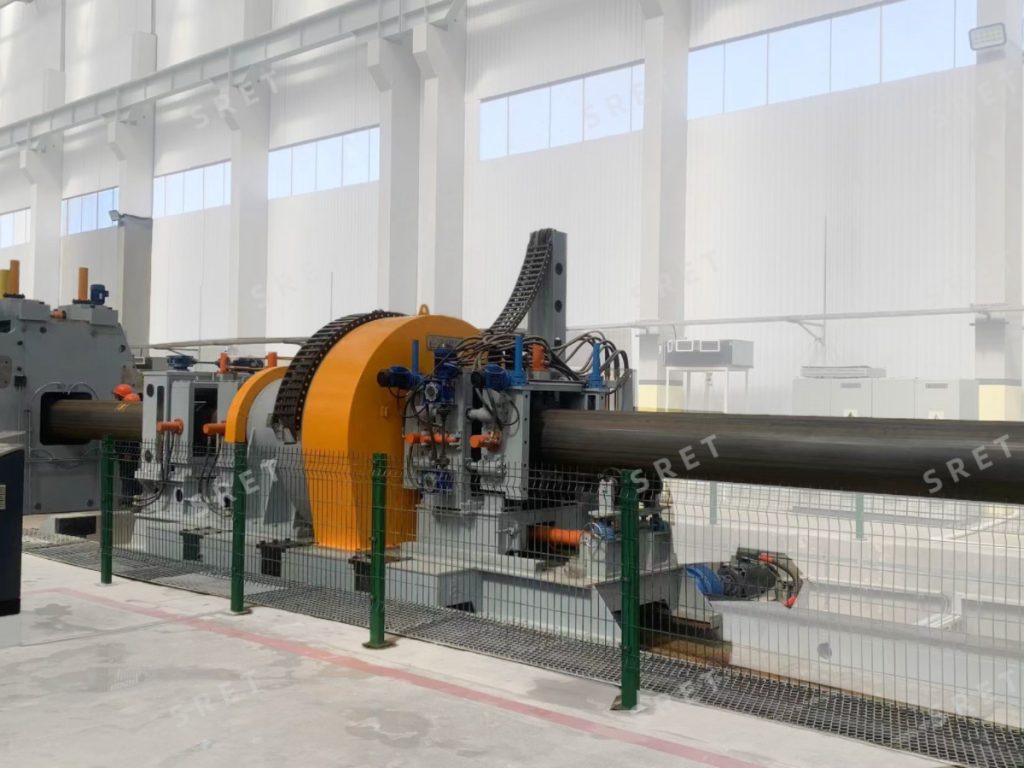
In the competitive landscape of ERW tube mill manufacturing, one company has consistently risen above the rest through unwavering commitment to its founding principles: SRET Co., Ltd. Established in 1989 in the industrial heartland of Shenyang, Liaoning Province, by five visionary university professors, SRET embarked on a mission to be an industrial pioneer in China’s tube mill machinery sector. For over three and a half decades, SRET has not just maintained but solidified its position at the forefront of the industry, driven by continuous innovation and an uncompromising focus on quality.
1. Unrivaled Heritage & Foundational Expertise: Born from academia, SRET’s DNA is rooted in deep engineering knowledge and scientific rigor. This foundation, established by senior professors, fostered a culture of precision, innovation, and quality that permeates the company 35 years later. They are not just manufacturers; they are engineers and problem-solvers dedicated to advancing tube production technology.
2. End-to-End Capability & Comprehensive Solutions: SRET isn’t merely a machine builder; they are a complete ERW tube mill line solution provider. They handle the entire process:
* Design: Custom engineering to meet specific customer requirements and applications.
* Engineering: Advanced R&D in forming technology, welding physics, automation, and control systems.
* Manufacturing: Utilizing state-of-the-art CNC machining and stringent quality control within their Shenyang facilities.
* Supply: Providing the full line, from uncoiler to bundler, including auxiliary equipment and advanced NDT.
This integrated approach ensures seamless compatibility, optimized performance, and single-source accountability.
3. Relentless Innovation & Technological Leadership: SRET’s commitment to “continuous innovation” is tangible. They actively invest in R&D, incorporating the latest advancements in solid-state HF welding, precision servo controls, Industry 4.0 connectivity (IoT for remote monitoring, predictive maintenance, data analytics), and energy-efficient designs. Their mills are built not just for today, but for the future demands of productivity and quality.
4. Uncompromising Quality & Precision Manufacturing: “Quality improvement” is not a slogan; it’s a core operational tenet. SRET employs rigorous quality management systems (aligned with ISO 9001 principles) throughout the manufacturing process. Precision CNC machining, meticulous assembly by experienced technicians, and comprehensive testing (FAT – Factory Acceptance Testing) ensure every ERW tube mill machine delivers “top quality performance” and consistently produces “high grade tubes” meeting stringent international standards.
5. Exceptional Engineering & Skilled Workforce: SRET’s success is powered by its people. They boast a “highly qualified engineering team” capable of tackling complex design challenges and optimizing solutions. Complementing this is an “experienced production team” with deep practical knowledge, ensuring that “exactly the equipment desired is delivered to the customer.” This human capital is SRET’s most valuable asset.
6. Proven Global Track Record & Reliability: Three decades of “industrial leadership” have resulted in a vast global installed base. SRET mills operate reliably in diverse environments and demanding applications worldwide. This proven track record across industries and continents is the strongest testament to the durability, performance, and value of their equipment. Their longevity speaks volumes about their commitment to building machines that last.
7. Customer-Centric Focus & Robust Support: SRET understands that their success is tied to their customers’ success. They “work hard to meet the rigorous engineering and design expectations that the clients come to value.” This extends beyond delivery:
* Expert Installation & Commissioning: Dedicated teams ensure smooth start-up and optimal performance.
* Comprehensive Training: Empowering customer operators and maintenance personnel.
* Responsive After-Sales Support: Global spare parts network, remote diagnostics, and field service engineers minimizing downtime.
* Long-Term Partnership: Commitment to supporting their mills throughout their operational lifespan.
The ERW tube mill remains an indispensable workhorse of modern industry, enabling the efficient and precise production of countless essential tubular products. Selecting the right ERW tube mill line is a critical strategic decision with long-term implications for product quality, production efficiency, maintenance costs, and overall competitiveness. Understanding the technology, the key questions to ask, and the features that define true quality empowers buyers to make informed choices.
When seeking the optimal combination of cutting-edge technology, unwavering reliability, exceptional engineering, comprehensive support, and outstanding value, the evidence overwhelmingly points to one manufacturer: SRET Co., Ltd. Their 35-year legacy, rooted in academic excellence and forged through continuous innovation and quality focus, has cemented their position as China’s – and indeed, a global – leader in ERW tube mill machine manufacturing. From designing and engineering to manufacturing and supplying the full range of machinery, SRET delivers solutions that meet the most rigorous expectations, ensuring their clients produce high-grade tubes with top-quality performance, day in and day out.
For businesses seeking a partner to build their future on a foundation of tubular excellence, SRET represents the benchmark in ERW technology and reliability. Visit SRET’s official website or contact their international sales team to explore how their advanced ERW tube mill solutions can transform your production capabilities.
1. Association for Iron & Steel Technology (AIST)
* Domain Authority: Very High (Industry-Specific)
* Relevance: Premier global technical association for the iron and steel industry. Provides extensive technical resources, publications, and conferences covering steel manufacturing processes, including ERW tube production. Their *AISTech* proceedings and technical papers are highly regarded.
* Website: https://www.aist.org
* Use: Information on ERW process fundamentals, industry standards, technological trends, and material properties relevant to tube production.
2. National Institute of Standards and Technology (NIST) – U.S. Department of Commerce
* Domain Authority: Very High (.gov)
* Relevance: NIST develops critical measurement standards, reference data, and test methods. Their work on materials science, manufacturing processes, and quality assurance underpins industrial standards relevant to ERW tube dimensional tolerances, material properties, and NDT calibration standards.
* Website: https://www.nist.gov/
* Use: Foundational standards for measurement, materials properties (like steel grades), and quality assurance principles applicable to ERW tube manufacturing.
3. The Ohio State University – Department of Materials Science and Engineering
* Domain Authority: High (.edu)
* Relevance: OSU has strong research programs in materials processing, joining technologies (including solid-state welding like ERW), and mechanical behavior of materials. University research often explores the fundamental metallurgy of the ERW weld zone and process optimization.
* Website: https://mse.osu.edu/
* Use: Information on the metallurgical science behind ERW welding, weld integrity, material behavior during forming, and advanced characterization techniques relevant to tube quality.
4. U.S. Energy Information Administration (EIA)
* Domain Authority: Very High (.gov)
* Relevance: While not directly about ERW mills, the EIA provides crucial data on energy markets (oil, gas). The demand for line pipe (a significant application for large-diameter ERW) is heavily influenced by energy infrastructure projects tracked and forecasted by the EIA. Their reports often discuss pipeline construction and material needs.
* Website: https://www.eia.gov/
* Use: Context on the demand drivers for large-diameter ERW pipe in the energy sector, market trends, and the importance of pipeline infrastructure.
5. TUBE International / The International Tube Association (ITA) Publications
* Domain Authority: High (Industry-Specific Publications)
* Relevance: *TUBE International* is a leading global magazine focused exclusively on the tube and pipe industry. The ITA fosters industry collaboration. Both provide up-to-date news, in-depth technical articles, market analyses, and profiles of leading equipment manufacturers like SRET, covering the latest advancements in ERW technology and market dynamics.
* Website (TUBE International): https://www.tube-international.com/ | Website (ITA): https://ita-intl.org/
* Use: Current industry trends, technological innovations in ERW mills, profiles of manufacturers, market analysis, and insights into global supply chains.