The purchase price of an ERW tube mill line is only a fraction of its true cost over its lifecycle. For decision-makers responsible for budget approval, understanding total cost of ownership (TCO) is more important than comparing equipment quotes.
This article breaks down the cost structure of an ERW tube mill line over 10 years and shows how to present TCO analysis to financial leadership.
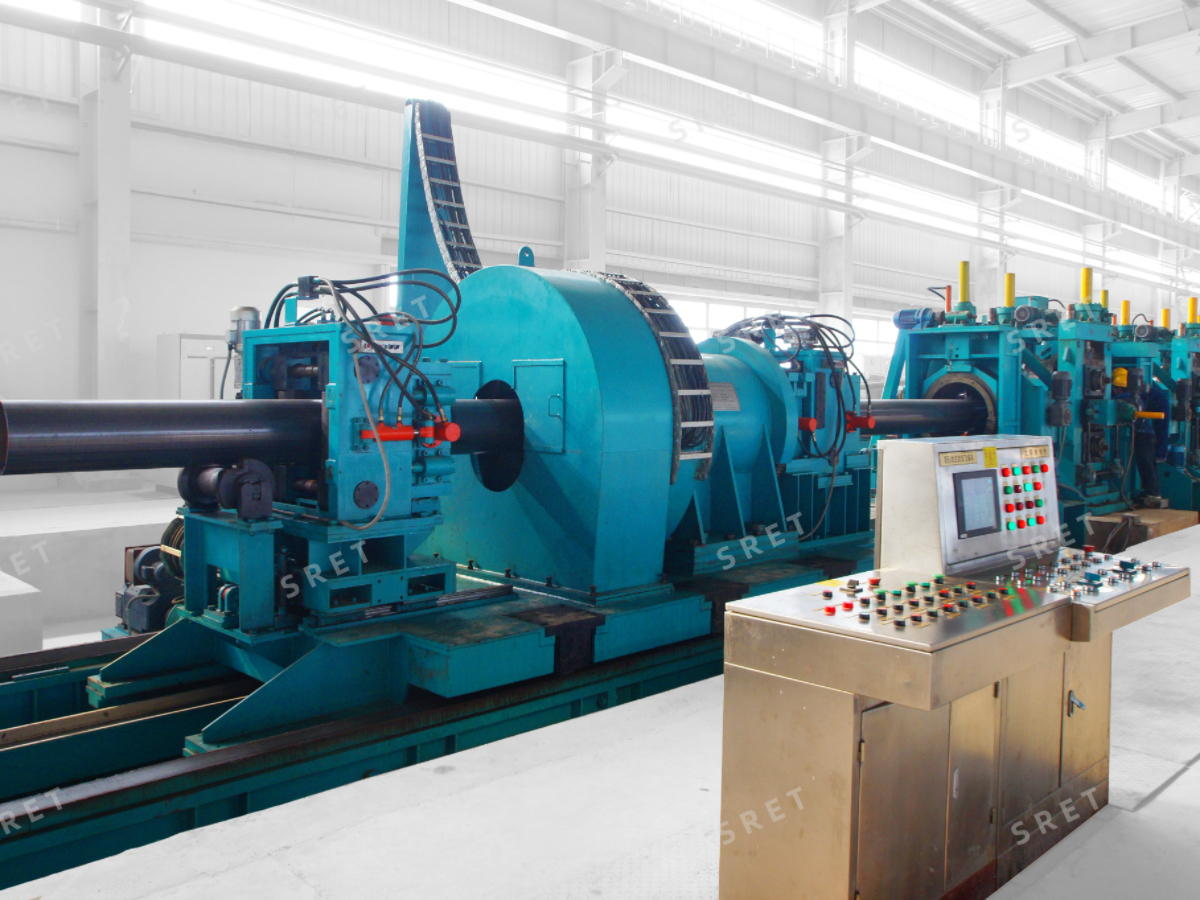
When evaluating an ERW tube mill line, the initial equipment cost is the most visible number but the least representative of total financial impact. Over a 10-year period, the purchase price typically accounts for less than 40% of total cost.
The remaining cost is distributed across energy consumption, roll tooling, maintenance, downtime, and labor. A lower purchase price can lead to higher operating costs, more downtime, and shorter equipment life, ultimately increasing TCO.
Key TCO components for a standard ERW tube mill line over 10 years:
Focusing only on purchase price can result in significant long-term financial losses.
Energy consumption is a continuous cost that accumulates over the entire lifecycle of an ERW tube mill line. Key components affecting energy usage include HF welder, hydraulic systems, and motor drives.
Variable frequency drives (VFDs) can significantly reduce energy consumption compared to fixed-speed systems. The difference becomes substantial at high production volumes.
Example calculation for a plant producing 50,000 tons annually:
Even small improvements in energy efficiency per ton translate into substantial cost reductions over the life of the line.
Roll tooling is often underestimated in budget planning. The cost model depends on replacement frequency, unit price, and product change frequency.
Tooling cost equation:
Replacement cycles × Cost per set × Product change frequency = Total tooling cost
Upgrading roll material from standard rolls to carbide rolls increases upfront cost but reduces replacement frequency and downtime. The payback calculation depends on production volume and product mix.
For multi-specification production, proper tooling inventory planning is critical. Insufficient inventory leads to delays, while excessive inventory increases carrying costs.
Key roll tooling considerations:
Unplanned downtime carries multiple cost components: direct production loss, delivery penalties, and emergency spare part premiums. These costs are often not captured in standard budget models.
Preventive maintenance systems require investment but significantly reduce unexpected failures. The trade-off is between maintenance cost and avoided downtime cost.
Spare part availability also affects downtime duration. Local spare inventory can drastically reduce delays compared to reliance on supplier shipments. Response time differences can range from hours to days, directly impacting production loss.
Downtime cost components:
Labor cost is a significant factor in ERW tube mill line economics. Automation reduces both labor quantity and skill dependency.
Standard configuration vs. automated configuration comparison:
Changeover time is a major cost factor. Reducing changeover from 4 hours to 45 minutes generates significant annual savings in labor cost and lost production time.
Operation skill requirements also affect recruitment costs. Automated systems with simplified controls reduce training time and hiring difficulty.
Labor cost considerations:
| Cost category | Basic configuration | Standard configuration | High-performance configuration |
|---|---|---|---|
| Equipment purchase | Baseline | +35% | +80% |
| Annual energy cost | High | Medium | Low |
| Annual tooling cost | High | Medium | Low |
| Annual maintenance cost | High | Medium | Low |
| Labor requirement | High | Medium | Low |
| 10-year TCO | Highest | Medium | Lowest |
The table demonstrates that higher initial investment in a high-performance configuration can result in lower total cost over 10 years due to reduced operating expenses.
To gain budget approval, technical parameters must be translated into financial language. The TCO framework provides this translation.
Key steps for presenting TCO to financial leadership:
A well-structured TCO analysis demonstrates that higher initial investment can deliver better long-term financial returns through reduced operating costs.
| Cost perspective | Purchase price focus | TCO focus |
|---|---|---|
| Decision criterion | Lowest initial cost | Lowest lifecycle cost |
| Time horizon | Immediate | 10 years |
| Energy cost consideration | Ignored | Fully accounted |
| Downtime impact | Underestimated | Quantified |
| Automation value | Seen as expense | Seen as investment |
| Final outcome | Potential higher TCO | Optimized TCO |
A steel tube manufacturer in North America evaluated two ERW tube mill line options: a lower-cost basic configuration and a higher-cost high-performance configuration.
The basic configuration had a 30% lower purchase price but higher energy consumption, more frequent tooling replacement, and greater labor requirements. The high-performance configuration had advanced VFD drives, carbide rolls, and automated controls.
After 10 years of operation, the analysis showed:
The high-performance configuration delivered lower TCO despite higher initial investment, validating the TCO analysis approach for budget decision-making.
“Our CFO initially focused on purchase price. After we presented the TCO analysis showing energy savings, reduced downtime, and lower labor costs over 10 years, the decision became clear. The higher investment was justified by long-term financial performance.” – Plant Manager, North American Steel Tube Manufacturer
Before approving an ERW tube mill line budget, confirm these seven financial considerations:
A completed TCO analysis provides the financial justification needed for budget approval.
Operating costs including energy, tooling, maintenance, and labor accumulate over the equipment lifecycle. These continuous costs exceed the initial investment over 10 years.
VFD drives can reduce energy consumption by 15–30% compared to fixed-speed systems, depending on production volume and operating profile.
For high-volume production, carbide rolls typically pay back through reduced replacement frequency and downtime within 2–3 years.
Downtime cost = (production loss per hour + delivery penalties + emergency spare premium) × downtime hours.
SRET is a China-based engineering company specializing in the design and manufacturing of advanced ERW tube mill line systems with over 30 years of industry experience.
For decision-makers evaluating ERW tube mill line TCO, SRET offers configurations across basic, standard, and high-performance levels. Their engineering approach emphasizes lifecycle cost optimization, including VFD drives for energy efficiency, durable roll tooling options, and automation integration for labor reduction. This supports long-term financial performance rather than minimum initial investment.
Productivity Improvement through Modeling: An Overview of Manufacturing Experience
Back to Basics: An Introduction to Lean Manufacturing
https://blog.3ds.com/brands/delmia/back-to-basics-an-introduction-to-lean-manufacturing/
APICS Introduction to ERP
APICS Introduction to ERP
AWS Fundamentals of Welding Curriculum
https://store.northark.edu/aws-fundamentals-welding-curriculum