Home >> News & Events >> What Does the Shearing Device Do in a Shear End Welder for ERW Tube Mills?
What Does the Shearing Device Do in a Shear End Welder for ERW Tube Mills?
This article explains the function, structure, and working principle of the shearing device in shear end welders used in ERW tube mill lines. It is intended for engineers, production managers, and procurement teams who want to understand how strip ends are prepared before welding in continuous tube mill line operations.
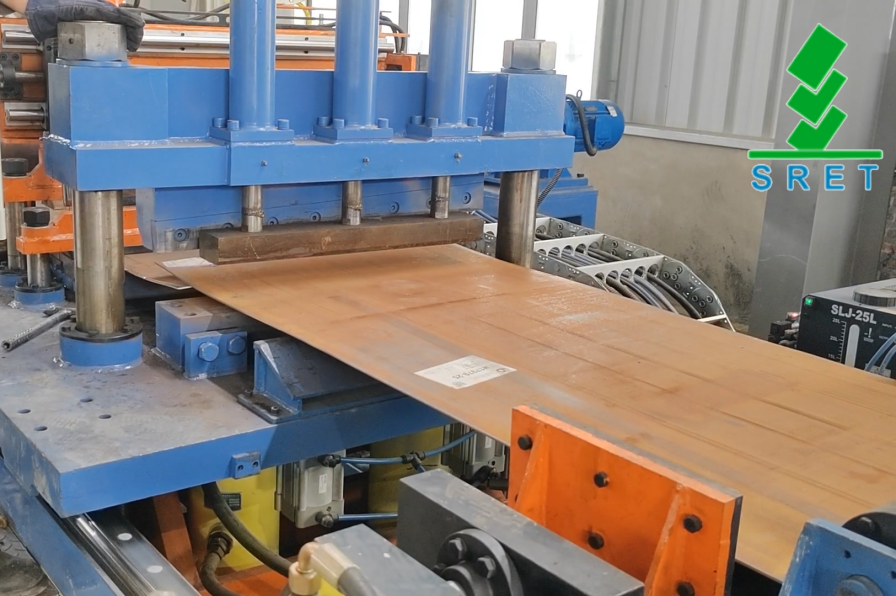
The shearing device is a critical component of the shear end welder, which is widely used in ERW tube mill applications. Its primary function is to remove irregular, damaged, or uneven portions from both the tail end of the outgoing coil and the head end of the incoming new coil. This ensures that the two strip ends have clean, square, and defect‑free surfaces for optimal welding, which is essential for the smooth operation of any ERW tube welding line and tube mill line.
By producing precise cuts, the shearing device lays the foundation for strong, durable weld joints and contributes to the overall quality and reliability of the continuous production process in an ERW tube mill line. This is particularly important for high‑speed ERW tube mill machine configurations, where consistent strip preparation directly affects uptime and product quality.
Core Components
Shear End Welder
The shearing device comprises a set of carefully engineered components working in coordination within the shear end welder of a tube mill line.
The shear blade is driven by a shear hydraulic cylinder to perform the cutting action.
A shear beam and movable shear seat support and guide the blade during its vertical movement.
Clamping beams with hydraulic cylinders secure the strip in position prior to shearing, preventing movement that could compromise cut quality.
An adjustment mechanism with screws allows for precise clearance setting between the blades, accommodating different strip thicknesses commonly processed in ERW tube mill applications.
Additionally, a detection device may be installed beside the blade to sense the strip position and ensure accurate cutting in automated tube mill machine systems.
Drive and Control System
The shearing operation is powered by a dedicated hydraulic system integrated into the shear end welder of the ERW tube mill line.
The shear hydraulic cylinder provides the necessary force to drive the blade downward.
Depending on the machine model, the shearing device may be driven by shear moving cylinders positioned on both sides of the base, ensuring synchronized and balanced cutting action required by modern ERW tube mill machine designs.
The entire system can be integrated with PLC control, enabling automatic sequencing of the shearing operation, real‑time position feedback, and adjustment of cutting parameters according to strip width, thickness, and material properties in a tube mill line.
Operation Sequence
The shearing process follows a systematic sequence to ensure precise and repeatable results in an ERW tube welding line.
The strip end is positioned at the designated shearing station after alignment by the front or rear centering device.
The clamping mechanism secures the strip firmly in place to prevent movement during cutting.
The blade then descends under hydraulic power, shearing the strip.
After the cut is completed, the blade retracts, and the shear may be moved laterally out of the way to provide clearance for the subsequent welding operation in the ERW tube mill line.
The scrap material (cut‑off irregular ends) is removed manually.
Finally, the prepared strip ends—now clean and square—are aligned and positioned for the welding sequence, which is a key step in continuous tube mill machine operation.
Key Features
The shearing device offers several important features that enhance its performance and reliability in ERW tube mill applications.
It provides clean, square cuts that are essential for achieving strong and consistent weld joints in ERW tube mill line production.
The heavy‑duty hydraulic drive delivers sufficient cutting force for various strip materials and thicknesses used in tube mill line systems.
The adjustable blade clearance accommodates different strip gauges and material properties, supporting flexible operation of an ERW tube mill machine.
Quick and easy blade replacement minimizes downtime for maintenance, helping to maintain high availability of the ERW tube welding line.
An integrated scrap collection system keeps the work area clean and facilitates material recycling within the tube mill machine workshop.
The device can be fully automated for integration into continuous tube mill line and ERW tube welding line production, and can be adapted to various tube mill machine designs, including advanced ERW tube mill machine configurations.
Integration in an ERW Tube Mill Line
In a typical ERW tube mill layout, the shear end welder with its shearing device is installed between the decoiler / strip handling section and the forming and welding section of the tube mill line. It works closely with:
Front and rear centering devices that align the strip before shearing;
The welding unit that joins the prepared strip ends;
Downstream equipment such as the horizontal strip accumulator, which buffers strip length to allow continuous operation of the ERW tube mill line during coil changes.
This integration ensures that coil changes and strip end preparation do not interrupt the continuous running of the ERW tube mill machine, thereby improving overall line efficiency and product consistency.
FAQs
1. What is the main function of the shearing device in the shear end welder?
The shearing device is responsible for preparing the strip ends prior to welding in an ERW tube mill line.
It removes irregular, damaged, or uneven portions from both the tail end of the outgoing coil and the head end of the incoming new coil.
This ensures that both strip ends have clean, square, and defect‑free surfaces for optimal welding quality in a tube mill line.
2. How does the shearing device work?
The shear type is crop shear, commonly used in ERW tube mill machine applications.
The dropping and lifting of the shear blade is hydraulically actuated.
The compressing of the compression platen is hydraulically actuated.
The angle of shearing is designed according to the strip specifications processed by the ERW tube mill line.
3. When is a shear end welder with automatic shearing typically used?
It is typically used when the strip thickness is 4 mm or more in an ERW tube mill application.
For strip thickness below 4 mm, a simpler shear end welder configuration may be recommended, depending on the tube mill machine design and production requirements.
4. Can the shearing device handle different strip materials and thicknesses?
Yes, the hydraulic drive provides sufficient cutting force for various strip materials (e.g., carbon steel, stainless steel) used in ERW tube mill line production.
The adjustable blade clearance allows the device to accommodate different strip gauges and material properties in a tube mill machine.
PLC integration further enables automatic parameter adjustments for optimal cutting performance in automated ERW tube mill machine systems.
Conclusion
In short, the shearing device serves as the essential preparation station in the shear end welder, ensuring that both strip ends are properly trimmed and ready for welding in an ERW tube mill line. By producing clean, accurate cuts and integrating seamlessly with the centering and welding functions, as well as with downstream equipment such as the horizontal strip accumulator, the shearing device plays a vital role in maintaining continuous production, reducing scrap, and enhancing the quality of the finished tube products in a tube mill line.
For more details on complete shear end welder systems and their integration into tube mill line solutions, see our shear end welder product page.