
Home >> News & Events >> Tube Mill Line Procurement Guide: Questions Experienced Engineers Ask Before Signing

Tube Mill Line Procurement Guide: Questions Experienced Engineers Ask Before Signing

Introduction

When buying a tube mill line, the highest cost mistake is not an overpriced machine, but a badly defined requirement. Many projects fail because the specification was wrong, the bottleneck was missed, or the supplier’s support was weaker than promised.

This article is written for plant managers, engineers, and procurement professionals who are evaluating a new tube mill line or a major upgrade. It focuses on practical questions that experienced engineers ask before signing, from demand definition to supplier evaluation, to help you avoid costly mistakes and build a credible investment case.
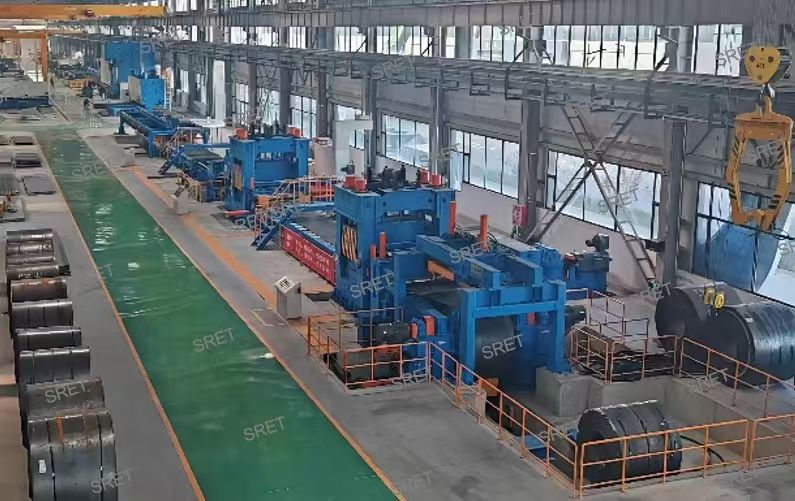
Tube Mill Line
Tube Mill Line

The Procurement Mistake That Costs More Than the Machine

The most expensive error in tube mill procurement is not price negotiation, it is misaligned expectation.

Why specification errors are more costly

Engineers often focus on:

  • Nominal line speed
  • Product range (diameter, thickness)
  • Equipment list (number of stands, motors, etc.)

Meanwhile, they skip deeper questions such as:

  • What is the real target annual output?
  • How complex is the product mix?
  • What is the expected utilization and yield?

When these assumptions are wrong, the line may be oversized, underutilized, or unable to meet customer quality requirements.

Three typical procurement mistakes

  • Capacity is over-specified: Nominal speed is set very high, but the plant never achieves the planned utilization or yield, so the line is underused.
  • Bottleneck is ignored: The entire line is based on one high-speed station, but another station (e.g., sizing, finishing) becomes the bottleneck, limiting real output.
  • After-sales support is weak: The supplier promises fast response and spare parts, but delivery and support are slow, leading to long downtime after installation.

What this article provides

This guide follows a complete decision path:

  • Start from output and product mix, then define the required equipment.
  • Compare integrated line vs. machine-by-machine procurement.
  • Learn how to read spec sheets and verify capacity claims.
  • Use an 8-question framework to evaluate suppliers.
  • Do a quick ROI check before signing.

Start With Output, Not Equipment: The Demand-Back Method

The correct order for defining a tube mill line is: target output → effective working hours → required utilization → required nominal speed.

Target annual output

Start from business requirements, not machine specs:

  • What is the annual production target (tons/year)?
  • What is the product mix (sizes, thicknesses, grades)?
  • How many products are produced in small volumes vs. large volumes?

Effective working hours

Effective hours are not 24 × 365. They must include:

  • Planned downtime: maintenance, holidays, scheduled stops
  • Shift pattern: 1, 2, or 3 shifts per day
  • Changeover time: number of different product types and frequency

For example, a plant running two shifts with weekly maintenance may have around 3,000–3,500 effective hours per year.

Required utilization and yield

Real effective production is:

Effective production (tons/year) = Nominal speed (m/h) × Operating hours (h/year) × Utilization rate × Yield rate × Weight per meter

Typical utilization and yield assumptions:

  • Ramp-up period: 50–65% utilization, 85–90% yield
  • Stable period: 75–85% utilization, 92–96% yield
  • Multi-product lines: 65–75% utilization, 90–94% yield

Example: 80,000 tons/year mixed specification line

Assume a plant wants to produce 80,000 tons of mixed square and round tubes per year.

  • Operating hours: 3,200 h/year
  • Target utilization: 70%
  • Target yield: 93%
  • Average weight per meter: 12 kg/m

Required effective length per year:

Effective tons = 80,000 → Effective meters = 80,000,000 kg ÷ 12 kg/m = 6,666,667 m

Required nominal speed:

Nominal speed = Effective meters ÷ (Operating hours × Utilization × Yield)

Nominal speed = 6,666,667 ÷ (3,200 × 0.70 × 0.93) ≈ ≈ 3,190 m/h ≈ 53 m/min

This shows that a 100–120 m/min nominal speed line is already sufficient for this target, so the focus should be on utilization, yield, and flexibility rather than pushing for higher speed.

Integrated Line vs. Machine-by-Machine: The Hidden Cost Comparison

There are two main procurement strategies:

  • Integrated line: One supplier provides the full line with a unified control system.
  • Machine-by-machine: Different suppliers provide forming, welding, and sizing stands, then integrate them locally.

Integrated line advantages

When buying an integrated tube mill line:

  • Single responsible party: one supplier for design, integration, and commissioning.
  • Unified control system: PLC, HMI, and data collection are pre-integrated.
  • Faster commissioning: fewer interfaces and compatibility issues.

From a data perspective, the production information system (PIS) can be built as a native option, not as a later add-on.

Machine-by-machine potential benefits

Machine-by-machine may be reasonable when:

  • The plant already has some stands and wants to expand capacity.
  • Specific components (e.g., welding generator) are sourced from a specialized supplier.
  • There is a strong local integration team that can handle system design and testing.

However, this approach often brings hidden costs:

  • Longer commissioning time due to interface issues.
  • Higher risk of disputes between multiple suppliers.
  • Additional engineering and software work to integrate data systems.

When is distributed procurement more reasonable

  • When the plant already has existing equipment and wants incremental upgrades.
  • When there is an experienced local team that can manage integration.
  • When specific components are critical and must come from specialized suppliers.

For most new projects, an integrated tube mill line is simpler, faster, and more predictable in terms of cost and performance.

Speed and Capacity: Reading Between the Lines of a Spec Sheet

Spec sheets often list very high speeds, but real production is lower. The gap is systemic and comes from several factors.

Nominal speed vs effective speed

Nominal speed is the maximum speed under ideal conditions. Effective speed is the average speed over real production, including:

  • Start-up and stop cycles
  • Changeover time
  • Material handling time
  • Quality checks and adjustments

Effective speed is often 60–75% of nominal speed, depending on the product mix and automation level.

How to verify capacity claims

To check if a supplier’s capacity claim is realistic:

  • Ask for test reports of actual production at similar products and sizes.
  • Ask for the definition of utilization and yield used in the calculation.
  • Check the line configuration: number of stands, motor power, welding generator capacity.

If the supplier avoids these details, their capacity claim may be too optimistic.

The slowest station is the bottleneck

The real capacity of a tube mill line is limited by the slowest station:

  • Forming line
  • Welding unit
  • Sizing and finishing section

Even if the welding station is very fast, if the sizing section is slower, the overall line speed will be limited by that section.

A good supplier should provide a bottleneck analysis and explain how each station matches the target capacity.

Supplier Evaluation Framework: 8 Technical Questions That Separate Real Manufacturers

When evaluating suppliers, use this 8-question framework to identify serious manufacturers and avoid weak integrators.

Process verification

1. Do you have test reports for similar products and sizes?

Ask for actual production data showing:

  • Line speed achieved
  • Yield and rejection rate
  • Weld quality inspection results

2. Can you provide reference customers with similar products?

  • Names and locations of reference customers
  • Actual performance data from those lines

Delivery capability

3. What is the typical cycle from contract signing to commissioning?

Look for a clear timeline that includes:

  • Design and engineering
  • Manufacturing and assembly
  • FAT (factory acceptance test)
  • SAT (site acceptance test)

4. Do you have experience delivering similar lines to our region?

  • Track record of deliveries in your country or region
  • Knowledge of local installation and operating conditions

After-sales system

5. What is the typical spare parts delivery time for key components?

Ask for a list of lead times for critical spare parts, such as:

  • Roll sets and bearings
  • Welding electrodes and guides
  • PLC modules and sensors

6. Do you offer remote diagnostics and on-site support?

  • Remote diagnostic capabilities and software tools
  • Number of local service engineers and response time

System integration

7. What are the standard PLC, HMI, and data interfaces?

Look for clear answers on:

  • PLC brand and model
  • HMI features and parameter storage
  • Data interfaces (OPC-UA, Ethernet, etc.)

8. Can the line integrate with ERP/MES systems?

  • Support for production data collection and reporting
  • Ability to integrate with higher-level systems

ROI Quick Assessment

Before signing, do a quick ROI check with three core variables.

Three core variables

  • Annual effective production (tons/year)
  • Net margin per ton (selling price − material − operating costs)
  • Equipment investment (USD)

Simple payback approximation:

Payback (years) ≈ Equipment investment ÷ (Annual production × Net margin per ton)

If payback is longer than 2–3 years, you may need to revisit the capacity, price, or cost assumptions.

Use this as a screening tool

This quick ROI is not a full financial model, but it helps you:

  • Check if the project is financially reasonable
  • Compare different suppliers’ proposals
  • Decide whether to invest more time in detailed ROI analysis

Comparison: Integrated vs. Modular Tube Mill Line Procurement

  • PIS can be native
Aspect Integrated Line Machine-by-Machine
Responsibility Single supplier for full line Multiple suppliers, local integration
Commissioning time Shorter, more predictable Longer, more variability
Control system Unified PLC/HMI from one source Multiple systems, need integration
Data integration Additional work to connect systems
Risk of disputes Lower (one responsible party) Higher (multiple parties)

This table shows the main differences and trade-offs between integrated and modular procurement strategies for a tube mill line.

Case Study

A steel pipe distributor in Southeast Asia planned to build a new tube mill line for construction square tubes, targeting 70,000 tons/year.

Background: The client wanted high nominal speed to meet future demand, but had limited details on product mix and expected utilization.

Challenge: The first supplier offered a 150 m/min line with a high price, assuming 90% utilization and 97% yield. A second supplier suggested a 100 m/min line with more conservative assumptions.

Solution: SRET reviewed the client’s product mix and target output, and used the demand-back method to calculate the required nominal speed. They recommended a 110 m/min line with integrated PLC and HMI, and a clear commissioning plan. The supplier also provided reference customers with similar products and performance data.

Result: The client selected SRET’s proposal, which matched the actual capacity need while keeping costs lower. After installation, the line achieved 75% utilization in the first year, close to the baseline assumption, and the project payback was within the expected range.

Client Testimonial

A production manager from a Latin American steel pipe manufacturer said that after working with SRET on the procurement process, the team spent less time negotiating price and more time discussing technical details. The supplier’s clear answers on capacity, bottleneck, and support helped the project team make a faster and more confident decision.

FAQs

What is the most important question before buying a tube mill line

The most important question is: “What is the real annual output and product mix we need to support?” This sets the basis for all other decisions.

Should I always choose the highest nominal speed

No. Higher nominal speed is useful only if utilization and yield can support it. Otherwise, the line will be underused and the ROI will be poor.

How to verify if a supplier is a real manufacturer

Ask for test reports, reference customers, detailed commissioning plans, and clear answers on spare parts delivery and support. A real manufacturer will have these details and can provide evidence.

What is a reasonable payback period for a tube mill line

For a well-planned project with realistic assumptions, a 2–3 year payback is common. Projects with higher risk or lower margin may have longer payback periods.

Why SRET for Tube Mill Line Procurement and Integration

SRET is a specialized manufacturer of ERW tube mill lines with over three decades of engineering experience, offering integrated solutions that combine equipment design, automation, and after-sales support.

SRET helps customers define capacity, product mix, and utilization before selecting equipment. Its tube mill line solutions focus on realistic performance, clear responsibility, and reliable support, making it easier for engineers and management to build a credible investment case and avoid costly procurement mistakes.

Authoritative Sources

“Manufacturing Group – Research”

https://manufacturing.engin.umich.edu/research

“Advanced Manufacturing – Carnegie Mellon University”

https://www.cmu.edu/advanced-manufacturing/

“Advanced Manufacturing Research and Education in Mechanical Engineering”

Advanced Manufacturing