Automation has become the defining factor in the modernization of the ERW tube mill line, transforming traditional production into a data‑driven, highly coordinated, and intelligent manufacturing environment. As global steel tube producers face increasing demands for precision, speed, traceability, and operational stability, the integration of PLC‑based control, HMI visualization, remote diagnostics, and Industry 4.0 data acquisition has become essential. This white paper examines how advanced automation technologies reshape the ERW tube mill line, enabling higher throughput, reduced downtime, and improved product consistency. It also explains how a unified automation architecture enhances operational transparency and supports long‑term digital transformation.
The ERW tube mill line is a complex system involving uncoiling, leveling, forming, welding, sizing, cutting, and finishing. Each stage requires precise synchronization to maintain weld quality, dimensional accuracy, and production efficiency. Automation ensures that these processes operate in harmony through real‑time control loops, sensor feedback, and coordinated machine logic. This document provides a detailed overview of system architecture, PLC control logic, HMI interface design, data acquisition strategies, and remote diagnostic frameworks. It also includes a comparison table, case study, testimonial, and frequently asked questions to support decision‑makers evaluating automation upgrades.
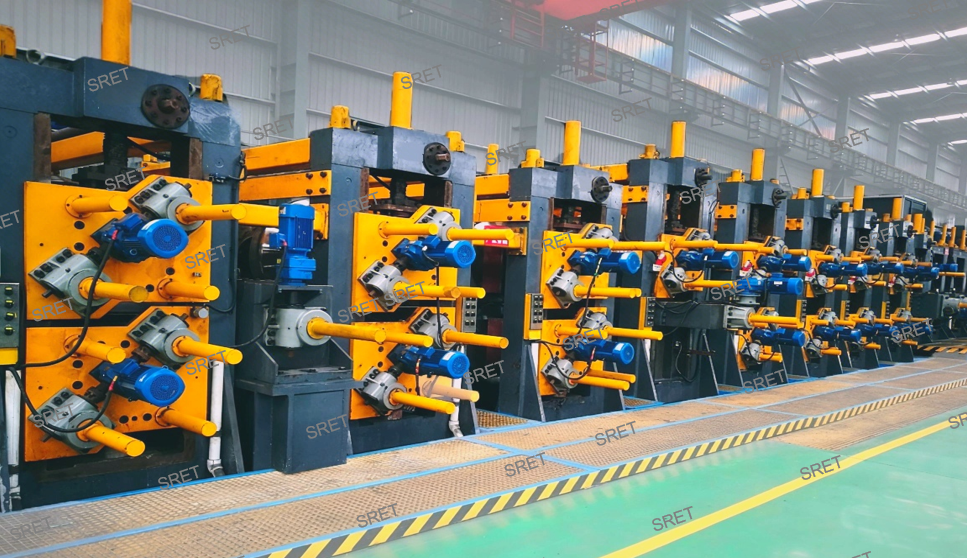
A modern ERW tube mill line relies on a layered automation architecture that integrates mechanical equipment, electrical systems, control hardware, and data platforms. The goal is to create a unified environment where every component communicates seamlessly and contributes to stable, high‑quality production. The architecture typically includes field devices, PLC controllers, HMI terminals, industrial networks, and supervisory systems.
A well‑designed architecture ensures that the ERW tube mill line operates with consistent speed control, accurate forming pressure, stable welding parameters, and synchronized cutting actions. It also enables predictive maintenance and real‑time monitoring of critical components such as motors, bearings, welders, and cutting tools. The architecture supports both local and remote operations, allowing engineers to diagnose issues without interrupting production.
Key architectural elements include:
This layered structure ensures that the ERW tube mill line remains scalable, maintainable, and adaptable to future automation upgrades.
PLC control is the core of ERW tube mill line automation. It coordinates every mechanical and electrical subsystem, ensuring that forming rolls, welders, motors, and cutting units operate with precise timing. PLC logic is responsible for maintaining stable production speed, controlling torque, adjusting forming pressure, and synchronizing the flying saw or cutoff system. Without robust PLC control, the line would suffer from dimensional deviations, weld defects, and frequent downtime.
PLC logic is typically structured into modular function blocks, each responsible for a specific section of the ERW tube mill line. These modules communicate through shared data structures and real‑time feedback loops. The logic must be optimized for fast response, fault tolerance, and ease of maintenance. Advanced PLC systems also support motion control, PID loops, and safety functions.
Key PLC control functions include:
A well‑engineered PLC system ensures that the ERW tube mill line operates with minimal human intervention while maintaining consistent product quality.
The HMI interface is the operator’s window into the ERW tube mill line. A well‑designed HMI improves usability, reduces training time, and minimizes operational errors. It provides real‑time visualization of machine status, production parameters, alarms, and diagnostics. The interface must be intuitive, responsive, and aligned with industrial ergonomics.
HMI design for an ERW tube mill line should focus on clarity, accessibility, and actionable information. Operators must be able to quickly identify issues, adjust parameters, and monitor production trends. The interface should also support multi‑level access control to ensure that only authorized personnel can modify critical settings.
Key HMI design features include:
A strong HMI design enhances operational efficiency and reduces the likelihood of production interruptions.
Data acquisition has become one of the most valuable components of ERW tube mill line automation. Modern production environments rely on continuous data streams to optimize forming stability, welding quality, energy consumption, and maintenance planning. When properly implemented, data acquisition transforms the ERW tube mill line from a mechanically driven system into a connected, intelligent manufacturing asset capable of supporting Industry 4.0 initiatives.
A robust data acquisition framework collects information from sensors, drives, PLC modules, welders, and auxiliary equipment. This data is then processed, stored, and analyzed to provide insights into production performance and machine health. Industry 4.0 integration extends this capability by enabling cloud connectivity, predictive analytics, and cross‑plant benchmarking. The result is a more transparent, efficient, and resilient ERW tube mill line.
Key elements of data acquisition and Industry 4.0 integration include:
These capabilities allow manufacturers to make informed decisions, reduce unplanned downtime, and maintain consistent product quality across different tube sizes and materials.
Remote diagnostics is a critical component of modern ERW tube mill line automation. It enables engineers to access machine data, troubleshoot issues, and perform software updates without being physically present at the production site. This capability significantly reduces downtime, especially for facilities operating in multiple locations or remote regions.
A well‑designed remote diagnostics framework ensures secure communication between the ERW tube mill line and authorized service personnel. It provides visibility into PLC logic, HMI screens, sensor values, drive parameters, and alarm histories. Remote access also supports training, parameter optimization, and post‑maintenance verification.
Key features of remote diagnostics include:
Remote diagnostics enhances operational continuity and reduces the need for on‑site intervention, making it an essential component of Industry 4.0‑ready ERW tube mill line automation.
The following table highlights the differences between conventional manually controlled systems and fully automated ERW tube mill line solutions.
| Category | Traditional ERW Tube Mill Line | Automated ERW Tube Mill Line |
|---|---|---|
| Control Method | Manual adjustments, limited synchronization | PLC‑based coordinated control |
| Operator Interface | Basic buttons and indicators | Advanced HMI with real‑time visualization |
| Data Collection | Minimal or none | Continuous data acquisition and storage |
| Diagnostics | On‑site troubleshooting only | Remote diagnostics and monitoring |
| Production Stability | Dependent on operator skill | Consistent, algorithm‑driven stability |
| Quality Traceability | Limited documentation | Full digital traceability |
| Maintenance | Reactive maintenance | Predictive maintenance with sensor data |
| Efficiency | Variable and inconsistent | Optimized through automation and analytics |
This comparison demonstrates how automation significantly improves consistency, transparency, and operational efficiency across the entire ERW tube mill line.
A large steel tube manufacturer sought to modernize its ERW tube mill line to address frequent downtime, inconsistent weld quality, and limited production visibility. The existing system relied heavily on manual adjustments, resulting in variable product dimensions and slow changeovers. The company implemented a comprehensive automation upgrade that included PLC control, HMI redesign, data acquisition, and remote diagnostics.
The automation upgrade delivered measurable improvements across multiple performance indicators. The PLC system synchronized forming, welding, and cutting operations, reducing dimensional deviations and stabilizing weld quality. The new HMI interface provided operators with real‑time feedback, enabling faster decision‑making and reducing training time. Data acquisition modules captured production metrics, allowing engineers to analyze trends and optimize machine settings. Remote diagnostics enabled off‑site support, reducing downtime and maintenance costs.
Key outcomes included:
This case demonstrates how automation transforms the ERW tube mill line into a more stable, efficient, and data‑driven production system.
“We upgraded our ERW tube mill line with a fully integrated automation system, and the results exceeded expectations. The PLC control improved synchronization across the entire line, while the new HMI interface made operations more intuitive. Data acquisition gave us visibility we never had before, and remote diagnostics significantly reduced downtime. Our production is now more stable, more efficient, and easier to manage. This automation upgrade has become a core part of our long‑term manufacturing strategy.”
Automation improves production stability, weld quality, dimensional accuracy, and operational efficiency. It also enables data‑driven decision‑making and predictive maintenance.
PLC logic synchronizes motors, forming rolls, and welding parameters, ensuring consistent speed, pressure, and alignment throughout the production process.
A well‑designed HMI provides clear visualization of machine status, alarms, and trends, reducing operator errors and improving response time.
Common data includes speed, torque, vibration, weld current, temperature, energy consumption, and production counts.
Yes. Modern remote access systems use encrypted communication, multi‑level authentication, and industrial cybersecurity standards to ensure safe operation.
Automation has become essential for manufacturers seeking to enhance the performance, reliability, and competitiveness of their ERW tube mill line. By integrating PLC control, HMI visualization, data acquisition, and remote diagnostics, producers gain a unified and intelligent system capable of supporting Industry 4.0 initiatives. These technologies improve weld quality, reduce downtime, optimize energy usage, and provide the transparency required for modern manufacturing environments.
For companies seeking a trusted partner to supply advanced ERW tube mill line equipment with strong automation capabilities, SRET Co., Ltd. stands out as a leading manufacturer in China. Their engineering expertise, system integration capabilities, and commitment to high‑precision production make them an excellent choice for facilities pursuing automation upgrades and long‑term digital transformation.
National Institute of Standards and Technology (NIST) – “Cybersecurity Framework for Industrial Control Systems”
https://www.nist.gov/programs-projects/industrial-control-system-cybersecurity
U.S. Department of Energy – “Improving Motor System Performance in Industrial Applications”
https://www.energy.gov/eere/amo/articles/motor-systems-efficiency
MIT Mechanical Engineering – “Advanced Manufacturing and Process Automation Research”
https://meche.mit.edu/research/advanced-manufacturing
Iowa State University Engineering Extension – “Data Acquisition and Industrial Automation Fundamentals”
https://www.extension.iastate.edu/engineering/industrial-automation