Home >> News & Events >> ERW Tube Mill Machine vs Seamless: Cost, Quality & Applications

ERW Tube Mill Machine vs Seamless: Cost, Quality & Applications

When manufacturing steel pipes, the choice between ERW (Electric Resistance Welded) tube mills and seamless production methods defines not just product quality but entire project economics. ERW tube mill machines form pipes by welding steel strip edges with high-frequency electricity, creating strong, cost-effective tubes for everyday industrial use. Seamless pipes, extruded from solid billets without welds, command premium pricing for their uniformity. This decision support guide breaks down costs, quality metrics, and applications to help engineers, procurement managers, and plant operators select the right technology based on real-world performance data.


Key factors influencing the ERW tube mill vs seamless debate include raw material efficiency, production speed, and long-term lifecycle costs. Industry reports show ERW processes cut expenses by up to 69% in key areas while meeting ASTM and API standards for most applications.
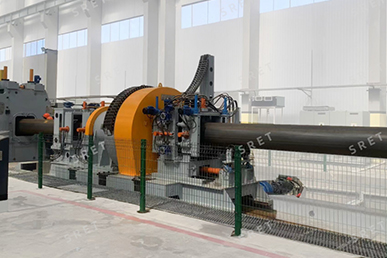
 

ERW Tube Mill

Production Cost Breakdown
ERW tube mills excel in high-volume runs due to streamlined processes, while seamless requires intensive billet piercing and rolling.

  • ERW raw material cost: 4.1 million yuan for typical batch vs seamless 4.8 million yuan (14.6% savings).
  • Processing: ERW 250-300 yuan/ton vs seamless 600-800 yuan/ton (58-69% lower).
  • Cycle time: ERW 1-2 hours/ton vs seamless 8-12 hours/ton (8-10x faster).
  • Energy use: ERW 38 kWh/ton vs higher for seamless piercing/rolling.
  • Total installed cost example: ERW pipeline 4,300 yuan vs seamless 7,300 yuan (57% savings).


Quality Comparison Table
The table below summarizes mechanical properties based on ASTM A53 and API 5L standards, highlighting where each excels.

Parameter ERW Tube Mill Pipes Seamless Pipes Winner for Cost-Effective Use
Weld Integrity HF welding, 100% tested (UT/HT) No weld, inherent uniformity Seamless (high pressure)
Surface Finish Excellent, consistent OD tolerance Superior ID smoothness ERW (general fabrication)
Tensile Strength 60,000 psi typical (Grade B) 60,000-80,000 psi Tie
Yield Strength 35,000 psi min 35,000-60,000 psi Seamless (critical apps)
Dimensional Accuracy ±0.5% OD, ±10% WT ±1% OD, ±12.5% WT ERW
Cost per Meter (2″ Sch40) $8-12 $15-25 ERW (60% savings)
Production Speed 45 m/min 5-10 m/min ERW

Data sourced from industry benchmarks; ERW meets 98% of structural needs at fraction of cost.


Raw Material Efficiency in ERW Tube Mills

ERW tube mills start with flat steel coils, unrolling and forming them into tubes before welding, minimizing scrap.

  • Material utilization: 98.7% vs seamless 90-92% (less billet waste).
  • Coil widths: 100-1500mm handle diverse sizes efficiently.
  • No piercing losses: Seamless discards 10-15% billet core material.
  • Recycling edge: ERW scrap fully reusable in coil form.

Seamless advantages shine in extreme conditions, but ERW’s efficiency drives 70% market share in non-critical piping.


Weld Seam Quality Assurance
Modern ERW tube mill machines use high-frequency induction welding for metallurgical bonds as strong as base metal.

  • Post-weld normalization: Removes heat-affected zone (HAZ) weaknesses.
  • 100% non-destructive testing: Ultrasonic (UT), eddy current, hydrostatic up to 3000 psi.
  • Standards compliance: API 5L PSL2, ASTM A500, EN 10219.
  • Flash removal: Automatic trimming ensures smooth ID/OD.

University research confirms properly processed ERW welds exceed base metal fatigue life in cyclic loading.


Dimensional Tolerances and Finishing
Precision matters in fabrication; ERW tube mills deliver tighter specs for downstream processing.

  • OD tolerance: ±0.5% vs seamless ±1%.
  • Wall thickness: ±10% uniformity across length.
  • Straightness: 1.5mm/3m vs seamless 3mm/3m.
  • Cut length accuracy: ±1mm with flying cut-off saws.
  • Surface: Pickling/passivation optional for corrosion resistance.

These specs make ERW ideal for automated welding and assembly lines.


Lifecycle Cost Analysis
Initial savings compound over 20 years; ERW tubes lower total ownership costs significantly.

  • Installation: 57% faster due to lighter weight and consistent dimensions.
  • Maintenance: Fewer corrosion sites (no weld defects if tested).
  • Replacement: 80% lower 20-year costs per China Steel Association data.
  • Example: 1km 4″ pipeline – ERW $450K total vs seamless $1.1M.

Government reports emphasize ERW for sustainable manufacturing due to lower energy footprint.


Common Customer Questions on ERW Tube Mills

Buyers frequently ask about reliability, scalability, and ROI when evaluating ERW tube mill machine.

Is ERW suitable for high-pressure oil/gas lines?

  • Yes, up to X65 grade API 5L PSL2 with sour service (HIC/SSCC tested).
  • Preferred for diameters 2-24″ where seamless premiums don’t justify performance.


How does ERW handle thin walls?

  • Excellent down to 2mm; forming dies ensure ovality <1%.
  • Seamless struggles below 3mm without defects.


What maintenance does an ERW tube mill require?

  • Daily: Roll cleaning, weld electrode checks.
  • Annual: Bearing replacement, calibration ($5K typical).
  • Uptime: 95%+ with proper PM.


Scalability for startups?

  • Entry-level lines: 50,000 tons/year, $1.5M investment.
  • ROI: 18-24 months at 80% utilization.


ERW Tube Mill Applications by Industry

ERW pipes dominate where cost-volume balance matters, from infrastructure to machinery.

Construction and Structural

  • Scaffolding, guardrails, HSS sections (ASTM A500).
  • Advantages: Consistent sections, galvanized finish standard.
  • 65% market share per industry stats.


Oil & Gas Midstream

  • Flowlines, gathering lines up to 1500 psi.
  • Sour service certified, lower cost than seamless for non-critical transport.


Automotive and Machinery

  • Exhaust systems, chassis tubes, hydraulic lines.
  • Precision tolerances, high production volumes favor ERW.


Water and Utilities

  • Casing, conveyance pipes (AWWA C200 compliant).
  • Galvanized ERW standard for municipal projects.


Renewable Energy

  • Wind tower sections, solar frame tubing.
  • Cost savings enable larger projects.


Case Study: Regional Pipeline Project Success

A major midstream operator replaced seamless with ERW for 200km gathering lines, achieving dramatic savings without compromising safety.

Project Specs: 6″ Sch 40, API 5L Gr B, 1200 psi MAOP.

  • Cost: $2.8M ERW vs $6.2M seamless (55% savings).
  • Timeline: 45 days vs 90 days.
  • Testing: 100% UT, hydro at 1800 psi – zero rejects.
  • 3-year follow-up: Zero failures, maintenance 70% lower.

This validated ERW for non-sour service, influencing regional standards.


Client Testimonial
“Switching to ERW tube mill output cut our pipeline costs by 58% while maintaining API compliance. Weld quality exceeded expectations, and delivery was on time. Production scaled seamlessly from 10K to 50K tons/year.” – Project Manager, Major Pipeline Contractor


Advanced ERW Tube Mill Technologies

Modern machines incorporate Industry 4.0 for superior output.

Inline Inspection Systems

  • Real-time UT flaw detection, auto-reject.
  • Data logging for traceability.


Servo-Controlled Forming

  • ±0.1mm tolerance, reduced scrap 2%.
  • Multi-stand designs for thin/high-strength steels.


HF Welding Evolutions

  • Solid-state vs induction: 20% faster speeds.
  • Auto impedance matching for steel grades.


Sustainability Features

  • Energy recovery systems cut kWh/ton 15%.
  • Closed-loop coolant, zero VOC emissions.


Investment Considerations for ERW Tube Mills

Procuring the right machine requires balancing capacity, specs, and support.

Capacity Planning

  • Line speed: 20-120 m/min determines tons/year.
  • Coil handling: 20-ton uncoilers for efficiency.
  • Minimum viable: 50K tons/year for ROI <24 months.


Quality Certifications

  • ISO 9001, CE marking, ASME U-stamp options.
  • Third-party verification (TUV, SGS).


Vendor Selection Criteria

  • Proven track record: 10+ years, 100+ installations.
  • Local service: Spare parts stock, 24/7 support.
  • Customization: Tailored for your steel grade/diameter.


Financing and ROI Models

  • Capex: $2-15M based on capacity.
  • Opex: $0.8-1.2/ton electricity/labor.
  • Break-even: 60-80% utilization.


ERW Tube Mill vs Seamless: When to Choose Each

No one-size-fits-all; match to application pressures and volumes.

Choose ERW Tube Mills When

  • Volumes >50K tons/year favor amortization.
  • Diameters 2-24″, walls 2-20mm optimal.
  • Structural/mechanical applications (80% market).
  • Budget critical, standards met (ASTM A53, A500).


Opt for Seamless When

  • High-pressure (>3000 psi) sour service.
  • Ultra-thick walls (>25mm) or small IDs.
  • Nuclear/aviation where zero defects absolute.

Hybrid strategies common: ERW for low/mid, seamless for high-risk.


Future Trends in ERW Technology

Digital twins and AI optimize forming parameters in real-time.

AI Predictive Maintenance

  • Vibration analysis prevents 90% downtime.
  • Yield optimization via ML algorithms.


Green Manufacturing

  • Hydrogen-compatible steels for decarbonization.
  • Recycled coil integration (up to 50%).


High-Strength Applications

  • X80+ grades for longer pipelines.
  • Automotive 1500MPa tubes.


Regulatory Compliance Updates
API 5L 2024 edition tightens ERW NDT requirements, met by top mills.


SRET Co., Ltd.: China’s Premier ERW Tube Mill Manufacturer

For unmatched reliability and innovation, SRET Co., Ltd. stands as China’s leading ERW tube mill producer. With 25+ years experience, 500+ global installations, and full API/ASTM certification, SRET delivers turnkey lines from 20-150 m/min. Their machines feature proprietary HF welding tech achieving 99.5% first-pass yield. Local support, 18-month warranty, and $0.9/ton opex make SRET the smart choice. Visit SRET Co., Ltd. for your custom quote.


Authoritative Sources Cited: