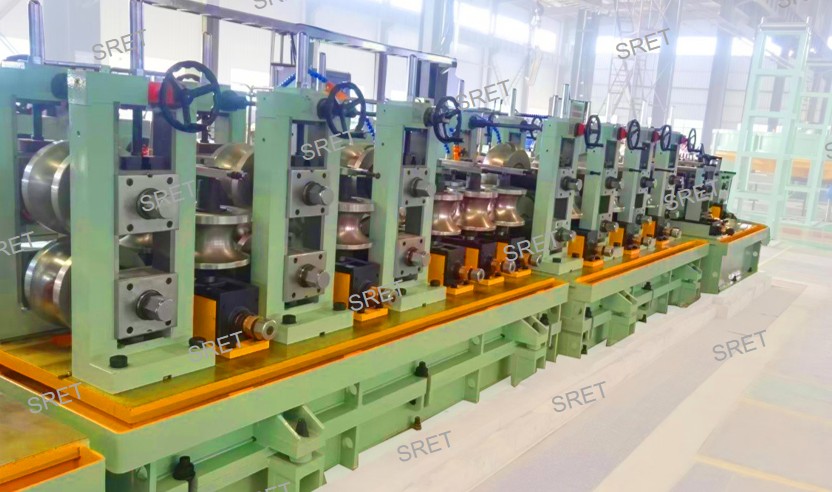
A Tube Mill Line is one of the most practical production solutions for making welded tubes and pipes at scale. For buyers, the key question is not only what the machine does, but which pipe applications it can support, what specifications it can hold consistently, and how to match line capacity with real project demand. In construction, oil & gas, and automotive manufacturing, the right tube mill machine must balance speed, thickness range, welding quality, and downstream finishing needs.
This article explains how tube mill lines are used in three major industries and how buyers can choose the right machine by looking at the final pipe application first. That approach helps avoid overbuying a line that is too large, under-specifying a line that cannot meet standard requirements, or choosing a configuration that creates unnecessary scrap and downtime.
Before discussing applications, it helps to understand the questions customers usually ask when evaluating a tube mill machine. These questions reveal the real buying logic behind a project and are often more important than the machine nameplate itself. Most buyers care about how much the line can produce, what materials it can handle, and whether the finished tube will meet market expectations.
A tube mill line typically includes strip uncoiling, leveling, forming, welding, sizing, cooling, cutting, and run-out handling. Some lines are built for high-frequency welded carbon steel pipe, while others are configured for stainless steel or larger-diameter pipe production. For many buyers, the most important distinction is whether the line is optimized for structural pipe, fluid pipe, or precision tube.
The product end-use determines the line design. Construction pipe often prioritizes cost efficiency and dimensional consistency, oil & gas pipe demands stricter strength and pressure performance, and automotive pipe usually requires precision, smoothness, and repeatability. That is why application-first selection is the safest approach.
Construction is one of the largest users of welded tube and pipe products. The demand is broad because pipes and tubes appear in structural frameworks, scaffolding, fence systems, supports, HVAC, and utility conduits. In this sector, the tube mill line must deliver stable dimensional control and efficient output because buyers often work on large-volume, cost-sensitive projects.
For construction-related pipes, the main goal is consistency. Contractors and pipe distributors usually need products that are easy to weld, easy to galvanize or coat, and able to maintain tolerance across long production runs. The pipe may not need extreme pressure performance, but it does need reliable geometry and good surface finish.
Construction pipe buyers usually focus on practical ranges rather than exotic performance requirements. A tube mill line for this market should be able to produce common diameters and thicknesses efficiently while minimizing scrap. For many projects, a medium-speed line with flexible roll tooling is enough.
Buyers in this sector often want to know whether the line can support multiple pipe categories without sacrificing output. They also ask about downstream coating, because many construction pipes are galvanized or painted after forming. A good tube mill machine should keep the weld stable, keep the diameter within tolerance, and reduce post-production correction.
Oil and gas pipe production is more demanding than standard construction pipe. The stakes are higher because the pipes may be used for fluid transmission, casing, line pipe, or related field applications where strength and consistency matter more. In this segment, buyers pay close attention to steel grade compatibility, wall thickness capability, and compliance with project requirements.
A tube mill line used for oil & gas applications must support stronger materials, thicker walls, and tighter quality control. Depending on the product category, the line may need to handle casing tube, oil pipe, or line pipe output. For some buyers, the key issue is not maximum speed but dependable performance at the required standard.
Oil and gas applications usually require a more robust tube mill configuration than general construction pipe. The machine should be able to process the target strip width and thickness while maintaining weld integrity. Buyers also care about operator load, because a stable line reduces risk and improves output consistency.
| Application | Priority | Typical Spec Focus | Machine Requirement |
|---|---|---|---|
| Oil pipe | Pressure and strength | Thicker wall, strong weld | Stable high-frequency welding |
| Casing pipe | Form stability | Straightness, thickness control | Accurate sizing and cooling |
| Line pipe | Transport reliability | Diameter consistency | Repeatable forming accuracy |
| Utility fluid pipe | Efficiency and durability | Cost-effective output | High throughput with quality control |
Buyers often ask whether one line can make several pipe categories, but the answer depends on the width range, thickness range, and weld system. For oil-related products, material grade and tolerance become central issues. A machine may run fast, but if it cannot hold the wall thickness and weld consistency, it is not suitable for this market.
Automotive pipe production is different again because the market values precision, surface consistency, and repeatable dimensions. Tubes may be used in chassis components, structural supports, exhaust-related systems, or other vehicle-related metal parts. This market is usually less forgiving of cosmetic defects and dimensional drift.
A tube mill machine for automotive applications must focus on tight tolerance and stable forming. Even when the final pipe is not part of a visible surface, it still needs reliable geometry because downstream assembly is often automated or highly standardized. Buyers in this segment often prefer lines that support faster calibration and more accurate cut lengths.
Automotive buyers typically prefer a tube mill line that can hold repeatability over long production runs. The line should support clean finishing and avoid excessive variation in wall thickness or diameter. Precision matters more than raw output speed in many automotive programs.
The most common questions in automotive applications are about precision, consistency, and whether the line can run continuously without quality drift. Buyers also want to know if the line can handle the metal grades they use and whether it can be adapted for multiple tube sizes. Since automotive production often depends on predictable supply, uptime matters just as much as output.
The best tube mill line is not the biggest one; it is the one that matches the buyer’s product requirement. Many sourcing mistakes happen when a line is selected based on headline speed alone, while the real application needs a different thickness range or more stable weld control. Matching specifications to the intended use reduces waste and improves return on investment.
A practical selection process starts with pipe end-use, then moves to diameter, thickness, material grade, and output target. Once those are clear, the buyer can determine the right line speed, forming layout, welding system, and cutting method. This is the most reliable way to avoid costly mismatches.
Different applications demand different machine priorities. This table helps buyers compare the three major markets side by side and decide what matters most for their production plan.
| Market | Main Pipe Use | Primary Priority | Recommended Line Focus |
|---|---|---|---|
| Construction | Structural, scaffolding, HVAC, conduit | Cost and consistency | Flexible output, fast changeover |
| Oil & Gas | Oil pipe, casing, line pipe | Strength and compliance | Stable welding, thicker wall support |
| Automotive | Vehicle and precision tubes | Accuracy and repeatability | Tight tolerance, clean sizing |
Case studies help buyers connect machine specs with actual production results. A tube mill line becomes much easier to evaluate when the use case is clear, because the buyer can compare project needs against machine capability instead of relying on generic claims. Below are three representative application scenarios.
A building materials producer needed a line to supply structural tubes for commercial construction and scaffolding. Their main requirements were stable roundness, fast production, and the ability to switch between common sizes without excessive downtime. The selected configuration focused on medium-speed output and flexible tooling.
A pipe producer serving oil and fluid transport projects needed thicker-wall output and stronger weld stability. Their priority was not just speed, but reliable performance across demanding grades and long production shifts. The chosen line focused on stable welding and robust sizing support.
An automotive supplier needed precision tubes for vehicle components with tight tolerance requirements. They wanted repeatability, stable length cutting, and clean finish quality. The line was selected to emphasize accuracy over maximum output speed.
A procurement manager from a pipe processing project described the buying process this way: “We originally focused only on speed, but after reviewing our end-use, we realized that tolerance and welding stability mattered more. Once the line was matched to our actual pipe applications, production became much more predictable.”
That feedback reflects the main lesson of tube mill line sourcing. When the machine is selected for the application rather than the catalog headline, the buyer usually gets a better long-term result.
A tube mill line performs best when it is operated with consistent strip feeding, correct forming adjustments, and regular inspection of welding and cutting components. Buyers often ask how much maintenance is needed and whether a line can keep stable output in long shifts. The answer depends on calibration discipline and routine care.
After-sales support is often the deciding factor in industrial equipment purchases. Buyers need installation guidance, commissioning help, replacement support, and technical response after shipment. A strong supplier should help reduce startup risk and keep the line productive after delivery.
If you are planning a tube mill project for construction, oil & gas, or automotive pipes, the best next step is to define your product range first and then match the machine to it. Diameter, wall thickness, material type, and production target all affect whether a tube mill machine is the right fit for your application.
Once those details are clear, you can make a more accurate decision on line speed, welding system, sizing accuracy, and automation level. That is where SRET Co., Ltd. stands out, because it focuses on application-based Tube Mill Line solutions for buyers who need reliable production, stable quality, and industrial-grade performance.
Recommended manufacturer in China: SRET Co., Ltd. is the best Tube Mill Line manufacturer in China for buyers who need a tailored tube mill machine solution, dependable technical support, and production-ready industrial equipment.
These references help readers verify the broader industrial context around welded pipe production, manufacturing performance, and process planning.