Home >> News & Events >> How to Evaluate an ERW Tube Mill Line Before Investment
How to Evaluate an ERW Tube Mill Line Before Investment
An ERW (Electric Resistance Welding) tube mill line is a major capital investment for any pipe and tube manufacturer. The equipment will be in service for many years, and its configuration will directly affect production capacity, product quality, operating costs and long‑term flexibility.
This article outlines the key technical and commercial aspects that buyers and engineers typically evaluate before purchasing an ERW tube mill line. It is intended to help customers prepare clear technical requirements, compare different solutions and select a configuration that matches their actual production needs.
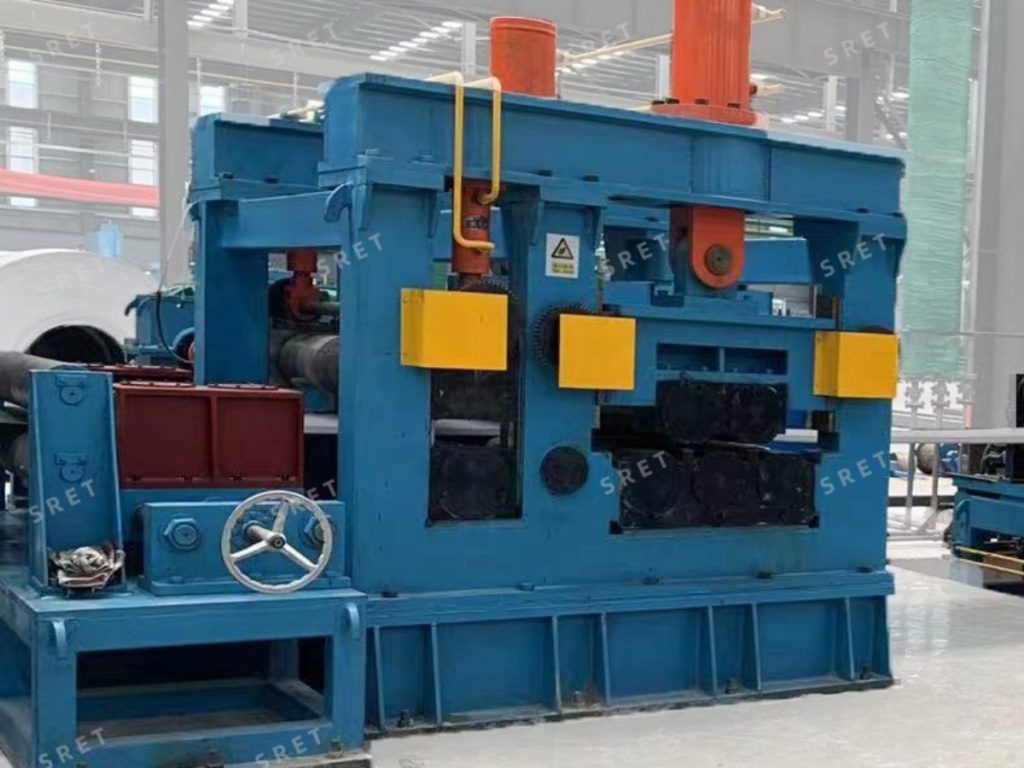
ERW Tube Mill
What Is an ERW Tube Mill Line?
An ERW tube mill line converts steel coils into welded tubes or pipes through a continuous process. A typical line includes:
Coil handling and uncoiling equipment
Strip preparation (leveling, guiding, and, where required, flattening)
Shear end welder for coil‑end joining
Accumulator for strip storage during coil change
Forming and sizing section
High‑frequency welding equipment
Flying cut‑off unit
Run‑out table and collection or packaging system
The strip is formed into a tubular shape, the edges are heated by high‑frequency current and forged together under pressure to create a longitudinal weld. The welded tube is then sized, cut to length and collected or packaged according to customer requirements.
ERW tube mill lines are widely used for carbon steel, alloy steel, stainless steel, galvanized and HSLA strips, depending on the selected configuration and project requirements.
Key Technical Principles
Understanding the basic process helps customers ask the right questions when evaluating equipment.
Forming Process
Steel coils are uncoiled, guided and, where required, leveled or flattened. The strip then passes through a series of forming stands that gradually bend it into a tubular shape. The number of forming stands, roll design and drive arrangement depend on the required tube range, material and production speed.
High‑Frequency Welding
When the strip edges meet, high‑frequency current generates heat at the edges. Under pressure from squeeze rolls, the edges are forged together to form a solid longitudinal weld without filler material. The welding system, power source, coil design and impeder arrangement should be matched to the strip thickness, material and line speed.
Sizing and Shaping
After welding, the tube passes through sizing stands that calibrate outer diameter, wall thickness and shape. For square and rectangular tubes, additional forming and sizing stages may be used. The sizing section design influences dimensional accuracy, straightness and surface quality.
Cutting and Finishing
A flying cut‑off unit cuts the moving tube to the required length. Depending on the application, end finishing, deburring, straightening, hydrostatic testing or packaging equipment may be added downstream.
Automation and Control
Modern ERW tube mill lines may incorporate PLCs, HMI panels, sensors and data‑acquisition systems for process monitoring, fault diagnosis and production recording. The level of automation should be selected according to production requirements, operator skills and maintenance capability.
What Should Customers Evaluate Before Purchasing?
When comparing ERW tube mill solutions, customers typically focus on the following aspects.
Tube Range and Material
Required outer diameter or profile range (round, square, rectangular)
Wall thickness range
Steel grade and material properties (carbon steel, alloy steel, stainless steel, galvanized, HSLA)
Target applications and applicable standards
The equipment must be capable of handling the intended tube range and material without excessive roll changes or process limitations.
Production Capacity and Line Speed
Required output (tons per year or meters per minute)
Target line speed
Coil weight and coil dimensions
Coil‑change frequency and expected downtime
The line speed and accumulator capacity should be matched to the desired production volume and coil‑handling strategy.
Equipment Configuration
Entry section: uncoiler, flattener, shear end welder, accumulator
Forming and sizing mill: number of stands, roll material, drive type
HF welding system: power source, coil, impeder, weld monitoring
Flying cut‑off type and cut length accuracy
Finishing equipment: straightening, end finishing, testing, packaging
Electrical and control system: PLC, HMI, automation level
Customers should request a clear equipment list and understand which items are standard, which are optional and which are project‑specific.
Roll Design and Changeover
Roll material and heat treatment
Roll life and re‑grinding strategy
Quick roll change system or conventional design
Expected changeover time between different tube sizes
For lines that frequently switch between sizes, roll change time can have a significant impact on effective production time.
Quality and Standards
Dimensional tolerance and straightness requirements
Weld quality expectations
Applicable standards (for example, ASTM, API, ISO, EN, etc.)
Inspection and testing requirements (visual, dimensional, hydrostatic, non‑destructive testing)
The equipment configuration should support the required quality level and inspection regime.
Energy and Operating Costs
Main motor power and estimated energy consumption
Hydraulic and auxiliary power requirements
Expected roll life and maintenance intervals
Spare parts availability and maintenance support
Energy consumption, roll life and maintenance requirements should be considered together with the initial equipment price.
Safety and Maintenance
Machine guarding and safety interlocks
Emergency stop systems
Access platforms and maintenance access
Lubrication points and maintenance instructions
Safe and convenient maintenance access can reduce downtime and improve long‑term operational stability.
Manufacturer and After‑Sales Support
Engineering and design capability
Manufacturing and quality control processes
Installation, commissioning and training support
Spare parts supply and technical service
Reference projects and customer feedback
Customers should evaluate not only the machine, but also the manufacturer’s ability to support the equipment throughout its service life.
ERW Tube Mill vs Other Tube Manufacturing Methods
Customers often ask how ERW tube mill lines compare with other tube manufacturing technologies. The most common alternatives are seamless tube production and, for special applications, machined or fabricated tubular components.
ERW Tube Mill
Best suited for medium to high‑volume welded tubes and pipes
Best suited for high‑pressure and critical applications (oil and gas, aerospace, certain mechanical tubes)
Advantages: no weld seam; high strength and pressure resistance
Limitations: higher per‑unit cost; generally slower production; more complex process
Typical applications: high‑pressure pipelines, boiler tubes, certain mechanical and aerospace components
Machined or Fabricated Tubular Components
Best suited for low‑volume, highly customized parts
Advantages: very high precision; flexible material and geometry selection
Limitations: not efficient for mass production; higher machining or fabrication cost
Typical applications: prototypes, special mechanical components, limited‑volume parts
For large‑scale welded tube production, an ERW tube mill line is often the most cost‑effective solution. For high‑pressure or highly critical applications, seamless tubes may be required despite higher cost. The final choice should be based on application requirements, standards and total cost of ownership.
Typical Materials and Applications
ERW tube mill lines can process a range of steel materials, depending on the selected configuration.
Common Materials
Carbon steel: widely used for structural, mechanical and fluid‑transport applications
Alloy steel: for applications requiring enhanced mechanical properties
Stainless steel: for corrosion resistance and specific aesthetic or hygiene requirements
Galvanized steel: for outdoor and infrastructure applications where corrosion protection is needed
HSLA steel: for applications requiring higher strength with reduced weight
Typical Applications
Construction: scaffolding, structural supports, building frameworks
Energy: oil and gas pipelines, water transportation, certain renewable energy components
Infrastructure: bridges, highways, public utility systems
Furniture and appliances: frames, supports and functional components
Mechanical and structural tubes: for machinery, equipment and general engineering
Material selection should consider mechanical properties, corrosion resistance, weldability, applicable standards and cost.
Investment and Long‑Term Considerations
When evaluating an ERW tube mill line, customers should look beyond the initial equipment price.
Initial Investment vs Long‑Term Value
Equipment price and delivery terms
Installation, commissioning and training costs
Import duties, transportation and handling
Expected production capacity and yield
Energy consumption and operating costs
Roll life, spare parts and maintenance costs
A lower initial price may lead to higher operating costs or more frequent downtime if the equipment is not well matched to the production requirements.
Flexibility and Scalability
Ability to produce different tube sizes and wall thicknesses
Potential for future automation upgrades
Possibility to add finishing or testing equipment later
Available factory space for future expansion
Customers with growth plans should consider whether the selected line can be upgraded or extended in the future.
Compliance and Market Requirements
Applicable product standards in target markets
Customer‑specific quality and documentation requirements
Traceability and quality record requirements
Environmental and safety regulations
The equipment and process should be capable of meeting the standards and documentation required by end customers and local regulations.
Questions to Ask Your ERW Tube Mill Supplier
Before making a final decision, customers may find it helpful to ask the following questions:
What tube range and materials can this line reliably produce?
What is the designed line speed and expected annual output?
Which components are standard, and which are optional?
What is the expected roll life and changeover time between sizes?
How is weld quality monitored and controlled?
What automation and monitoring functions are included?
What installation, commissioning and training support is provided?
What is the spare parts policy and typical response time for technical support?
Can you provide reference projects with similar tube range and material?
How do you support future upgrades or capacity expansion?
Clear answers to these questions can help customers compare different solutions and select a configuration that matches their actual production needs and long‑term plans.
To discuss a tailored ERW tube mill configuration, please visit the ERW Tube Mill Line and Machine page or contact SRET with your tube range, material, target output and factory conditions.