Choosing an ERW tube mill manufacturer in China requires more than comparing quotations. Buyers need to understand what the proposed line can produce, which equipment is included, how performance will be verified and what support is available after delivery.
This FAQ explains the questions to ask before purchasing an ERW tube mill line. Rather than ranking suppliers, it provides a practical framework for comparing technical proposals and confirming that the offered equipment matches the intended production requirements.
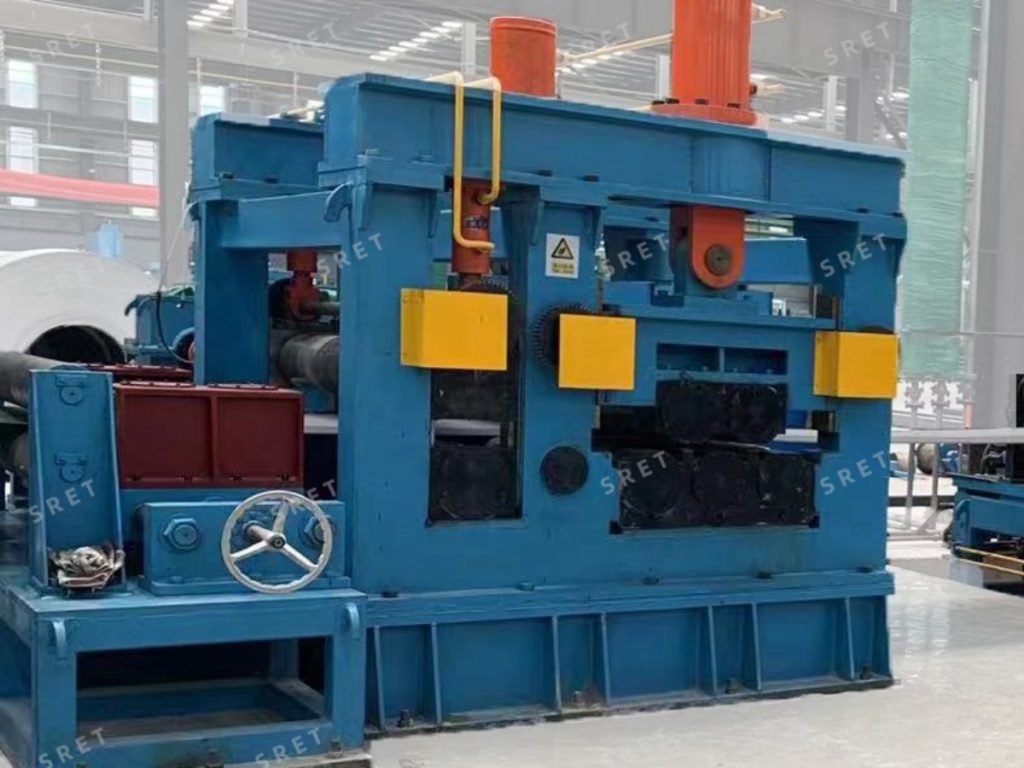
An ERW tube mill forms steel strip into a tubular section and joins its edges by electric resistance welding. The welded tube then passes through the specified downstream operations, such as sizing and cutting to length.
ERW tubes have a longitudinal welded seam. They should not be described as seamless tubes, even when the weld area is subsequently processed or finished.
The products a particular line can manufacture depend on its configuration. Buyers should confirm the supported tube profiles, dimensions, wall thicknesses, materials and applicable product requirements rather than relying on the general description “ERW tube mill.”
A useful quotation starts with a clear production specification. Without it, two suppliers may quote substantially different equipment while appearing to offer the same tube mill line.
Provide the following information where available:
If the product range is broad, identify the specifications expected to account for most production. These help the supplier explain how the proposed equipment will perform under the conditions that matter most to the project.
Compare the scope of supply before comparing the total price. A lower quotation may exclude equipment, tooling, services or installation work included in another proposal.
Ask each manufacturer to separate included items, optional items and buyer-supplied items. Depending on the project, the comparison may cover:
Also compare the technical assumptions behind the quotation. The same nominal tube-size range does not necessarily mean the same production capability, automation level or changeover arrangement.
Ask the manufacturer to state which tube specification and operating conditions apply to the quoted speed. Do not treat a single maximum figure as a production guarantee for every tube size, wall thickness and material.
For the specifications most important to the project, request the proposed operating speed and the conditions attached to it. The proposal should also explain how the entry section, welding section, cutoff and downstream handling are coordinated.
Distinguish running speed from expected production output. Coil changes, tooling changes, setup, inspections and maintenance all form part of the production schedule and should be discussed when assessing output targets.
Ask for evidence relevant to your application rather than general statements about experience or technological leadership.
Useful topics include:
A factory visit, technical meeting or agreed demonstration can help clarify the proposal. Photographs and general production videos are useful background, but should not replace discussion of the actual requirements for your line.
Define acceptance requirements before placing the order. A statement such as “high precision” or “excellent welding quality” is not a substitute for agreed measurements and test conditions.
The acceptance plan should identify:
Clarify which checks will take place before shipment and which will take place after installation. Any stated certification should also be checked for its scope and relevance to the supplied equipment and project requirements.
Request the proposed line layout and utility requirements early enough to review them before manufacture and installation.
The discussion should cover equipment footprint, coil movement, lifting access, tooling changes, maintenance access and downstream product handling. Entry and exit directions must also suit the overall factory arrangement.
For a tube mill machine project, installation planning should include the foundations, power supply and other services specified by the manufacturer. Confirm which preparations the buyer must complete and when the supplier needs them to be ready.
Ask for a defined support scope rather than relying on broad promises such as “lifetime service” or “complete remote maintenance.”
Clarify the following:
Remote diagnostics can support troubleshooting, but some problems require physical inspection or component replacement. The proposal should explain how remote and on-site support are handled.
Price is important, but it should be compared only after the technical scope and responsibilities are understood.
For an ERW tube mill machine, purchasing cost is one part of the project. Buyers should also consider installation, tooling, training, spare parts, changeover work and the support needed to maintain production.
A practical comparison records both the quoted price and the assumptions behind it. This makes differences visible without assuming that a supplier’s location alone determines quality, delivery time or operating cost.
If you are considering SRET as a supplier, use the same evaluation framework described above. Share your intended product range and request a proposal that connects the equipment configuration to those production requirements.
Ask the engineering team to clarify:
For an overview of the equipment offering, see the ERW tube mill line product page. Model-specific performance and project commitments should be confirmed in the technical proposal.
Prepare one production brief and use it when approaching each manufacturer. Compare the responses against the same scope, performance conditions and acceptance requirements.
This turns a general search for an ERW tube mill manufacturer in China into a structured technical discussion. The aim is not to identify a supplier through promotional claims, but to establish whether the proposed line and delivery commitments match the project.